

When, in the early 18th century, the New York-based Bowling Green Lift-Van Company produced the first 8' x 8' x XNUMX-foot metal crates, it could not have guessed that it was starting a revolution in the global transport of goods. He completed the work
entrepreneur Malcolm McLean, who designed the first standard container in the 50s . He probably never dreamed that the "box" he created would find applications in so many areas of life and the economy.
The maritime transport revolution

Malcolm McLean's design and his first container ship, the Ideal X, forever changed the face of maritime transport. The cargo container he created remains virtually standard to this day. Initially, it was 33 feet long (later increased to 35 feet), and 8 feet wide and high. The greatest advantage of the American's idea was standardization, which translated into significant reductions in freight transport costs. And although the dimensions of maritime containers have now been standardized to 20- and 40-foot sizes, the key principle remains unchanged – the "boxes" must be standardized.
One container, thousands of goods
The dimensions of the containers are uniform, the construction is similar, but thanks to the introduction of different types, they can be used to transport virtually any goods. This makes container transport completely unrivaled - as much as ⅔ of sea transport in the world is containerized cargo.
General purpose containers…
And so, general-purpose containers are well suited for the so-called. and at the same time they are the most universal. The most popular in this category are containers with doors located on one of the front walls, a floor made of container plywood, as well as vents that allow natural ventilation.
Another type are dry bulk containers with a structure that is more resistant to loads arising during filling, transport and emptying. They are additionally equipped with filling and emptying openings, making them ideal for the transport of solids in bulk without packaging.
… and also for special purposes
Isothermal containers are an essential element of the food supply chain, as well as other temperature-sensitive goods, such as pharmaceuticals. They owe their insulating properties to polyurethane walls and can be cooled using a refrigeration unit. Another popular type of shipping container is the tank type. These containers are used for transporting liquids or gases and are constructed simply: a tank is placed within a frame the size of a standard container . This solution also enables the transport of hazardous, explosive, flammable, or toxic cargo.
We also shouldn't forget about an important type of container, designed for packing loads that can't be accommodated in a standard container , for example due to their dimensions. These are containers with an opening roof. There are two types: hard tops , with a folding roof made of steel, or roofless versions with only a tarpaulin cover (secured for transport with a customs rope).
Non-transportable shipping containers
Once containers became the standard in transportation, they began their career in other areas. Today, they are an integral part of construction sites , urban spaces, and sports facilities. Their durable, yet simple, and versatile design allows them to be used in many, sometimes surprising, areas. Among the most popular uses for containers are:
- storage,
- residential,
- office,
- commercial,
- gastronomic,
- sanitary,
- medical,
- military.
First: the warehouse

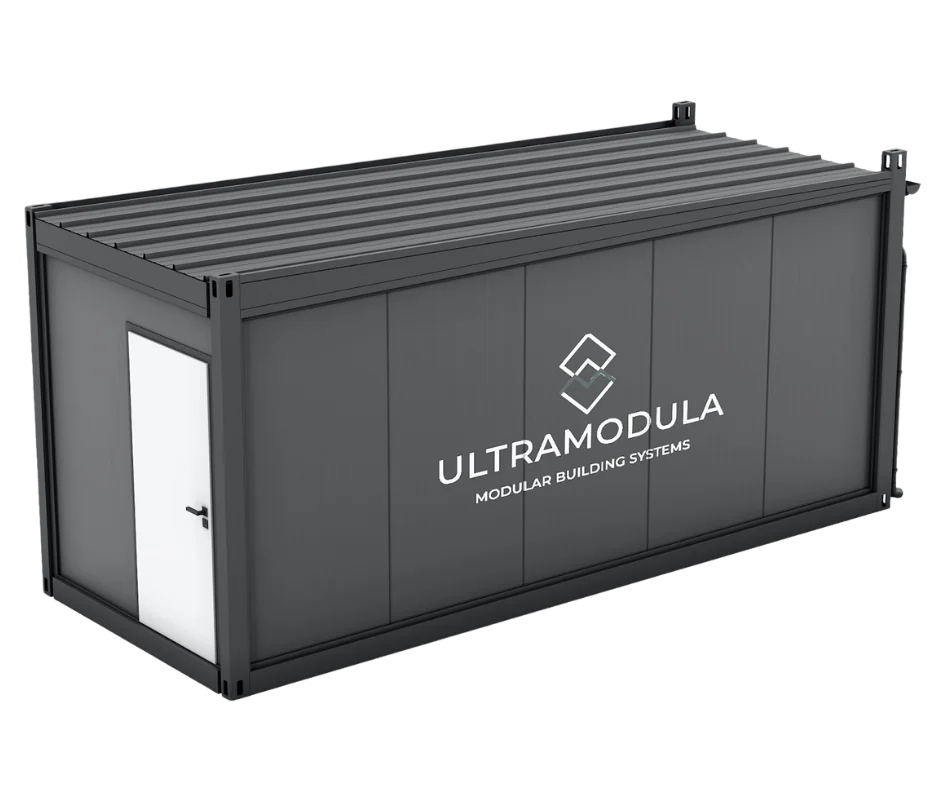
Storage container Ultramodula.
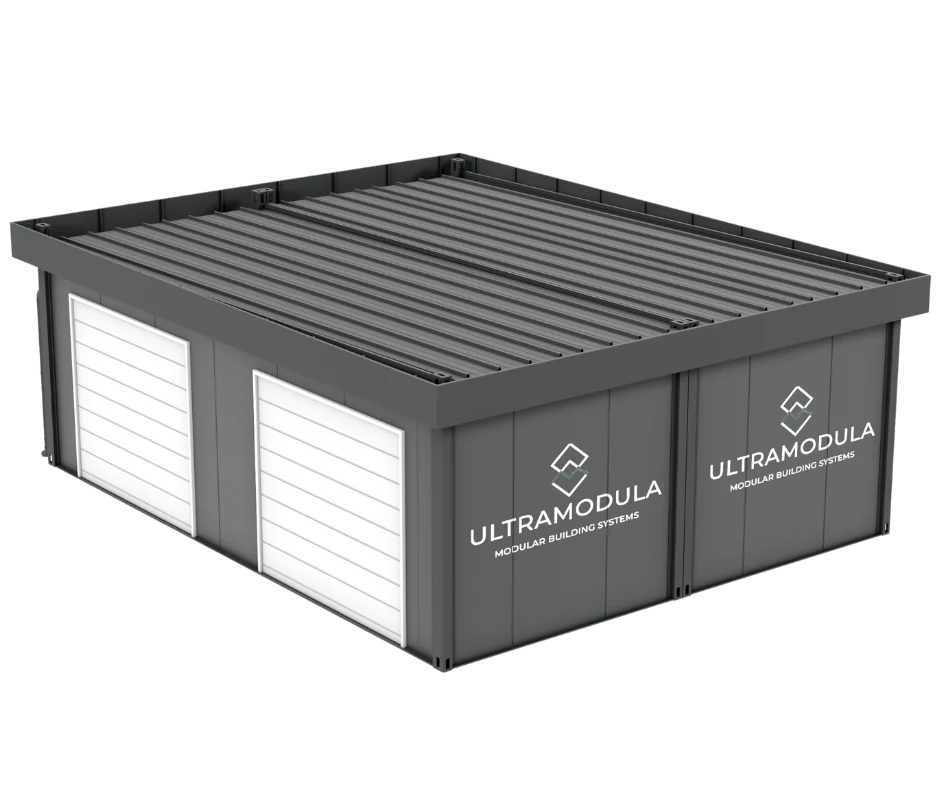
The natural path to expanding container use after transport was the storage space inherent in the transportation and delivery of goods to recipients. Containers are ideal as warehouses for several reasons. First, it's worth mentioning the cost. Purchasing a storage container is inexpensive, especially compared to building your own building . Importantly, the maintenance costs after purchase are very low. Typically, there's no need to heat it (unless the goods stored within it require it) or hire someone to supervise it. Another advantage is the speed and ease of assembly, as well as the ability to quickly relocate it to another location when needed.
Or maybe a home or office in a container?
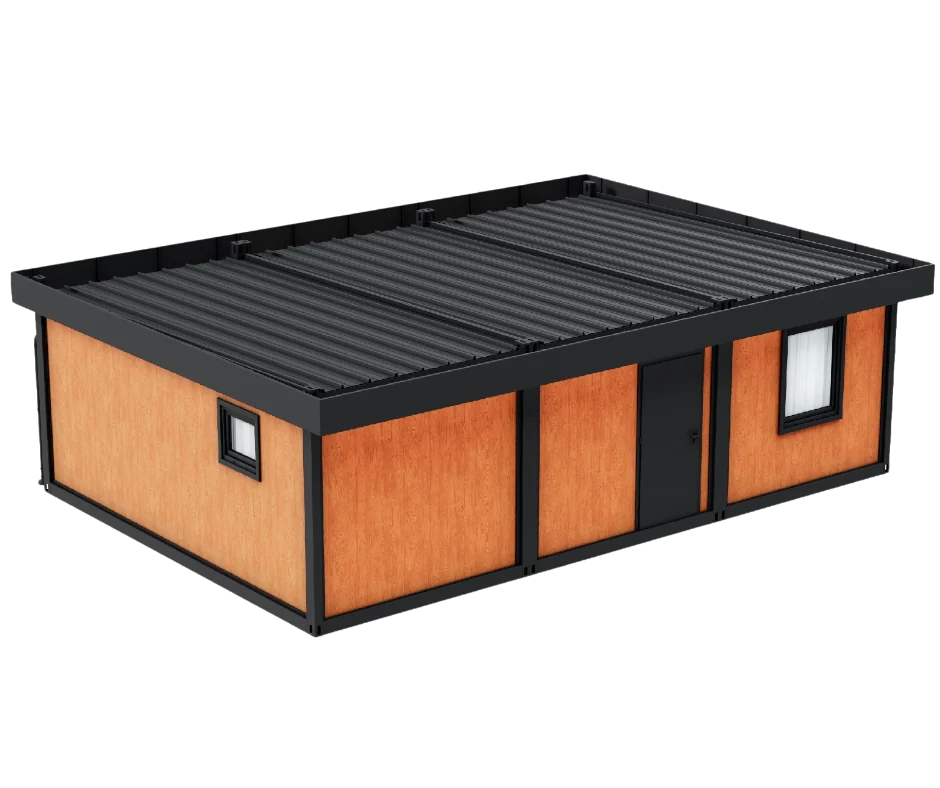
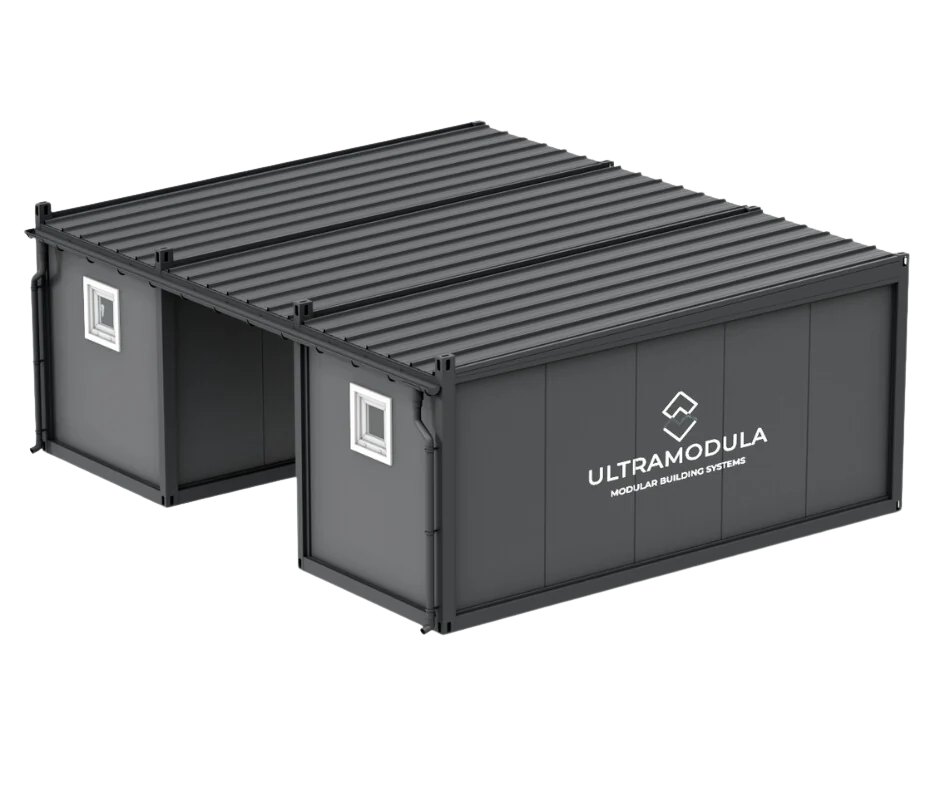
Office containers are an excellent choice as a first office for a growing company. They're inexpensive to build, and if a few conditions are met, they can be built without a building permit, eliminating unnecessary and complicated formalities. The market offers various sizes of units, starting with a mini option with a usable area of just 6m² , but a container office can be easily expanded. Thanks to the modular design of containers, adding additional units to an existing structure is truly simple. This is a convenient and optimal solution, as it allows for increasing usable space at any time, without relocating or costly renovations. Interestingly, such an office can be expanded not only "widthwise" but also upwards. The high-quality construction of these containers allows them to be stacked.

Container housing, in turn, is a solution to many of the problems facing the modern world. It can be an effective way to address the issue of housing victims of natural disasters such as earthquakes and hurricanes. It can also provide support to overpopulated regions of the world. It also allows for the construction of temporary homes , for example, for events like the Olympic Games.
Contemporary architecture also uses sea containers to build housing estates in modern global metropolises as a form of care for the natural environment. The formula of such buildings is based on the reuse of containers used for sea transport, thanks to which it clearly follows ecological trends,
We would like to point out that container construction also has its luxurious face. An example is Quick Houses Adama Kalkina lub sun designed by Sebastián Irarrázaval from Chile with an area of 350 m2.
Commercial and gastronomic pavilions
Availability, modularity , and low costs all make containers an ideal solution for retail. Creating retail spaces using them is quick and easy, and they also allow businesses to relocate to new locations, allowing them to keep up with customers. Each retail container can be equipped with electrical wiring and is easy to upgrade, while also boasting a modern look.

Pavilion
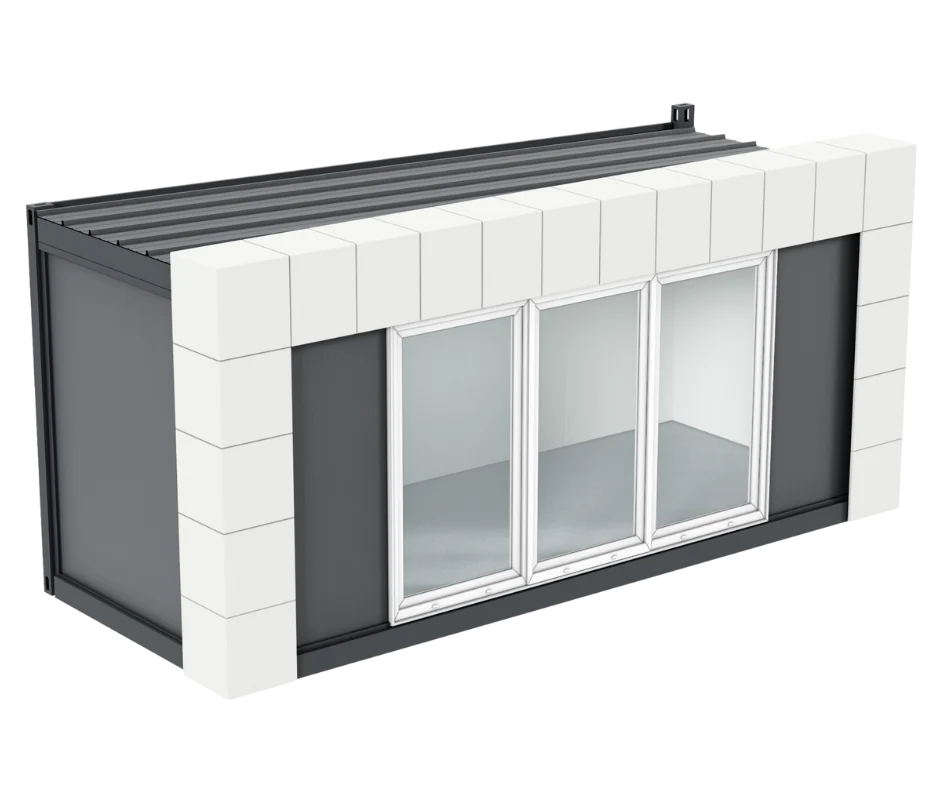
The box-shaped design of containers offers a wide range of possibilities, not only for highly economical projects, such as the aforementioned shopping malls , but also for avant-garde and designer-oriented projects, such as unusual cafes and restaurants. An excellent type of container that can be used in this way is the so-called open-side version, with an opening side wall. It allows for a very open layout, perfectly fitting, for example, into increasingly popular food truck zones.
Sanitary, medical and military containers

Sanitary container inside.
A solution frequently used, for example, on construction sites, are sanitary containers that can house toilets, sinks, and showers. This option also works well in municipal swimming pools and outdoor swimming pool complexes.
Medical containers are a more complex topic, but they are excellent proof of how versatile containers are. Their use in the medical sector can be very basic, for example, as first aid stations during festivals or other mass events, but they can also have the most important function: saving lives if the containers are used to build a hospital in a natural disaster area. Medical containers were also widely used during the Covid-19 pandemic, both for mobile testing and, later, vaccination sites, and as hospitals in regions where the scale of the disease exceeded the capacity of local health centers.
Containers are also used by the military, using them to build residential infrastructure for soldiers, warehouses and field hospitals. Their mobility and universality of transport make them an excellent base for the army, which must be quickly relocated in the event of a crisis.
Infinite ideas for containers
The list of ideas for using containers is long, but it is certainly not closed. The simplicity of the design and the wide range of modifications are waiting for new, surprising patents for their use. The only limit is human imagination, and this, as we know, has no limits.