
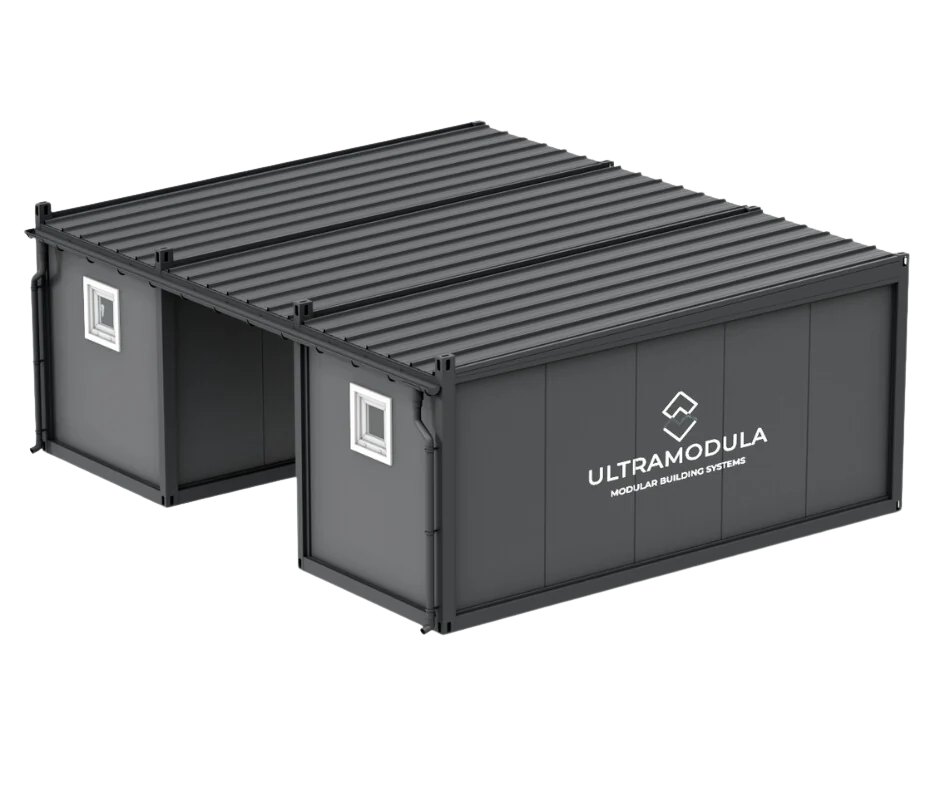
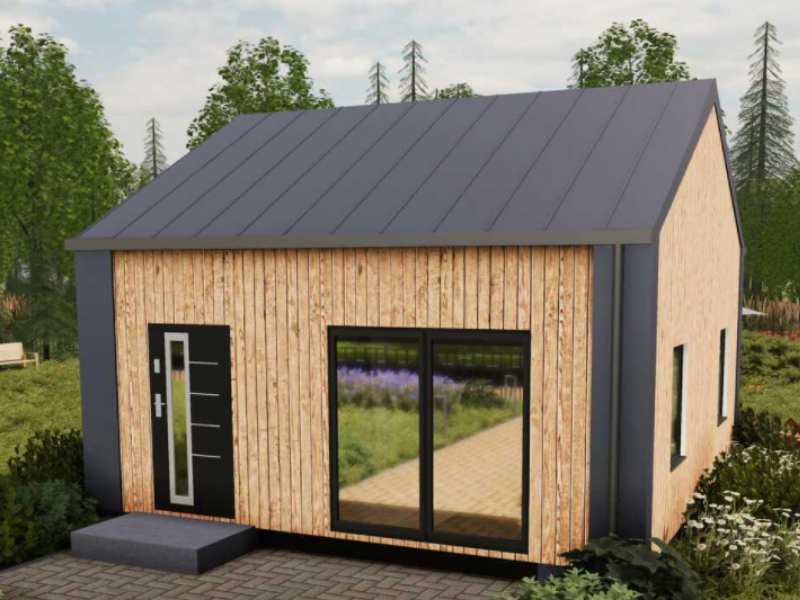
Modular construction seems to be a very modern solution, with a relatively recent history – but this isn't entirely true. While the boom in these solutions is linked to the strong urbanization trend of the last few decades, the idea itself and its use are not new. The history of modular building systems stretches back centuries. The first modular building design known to architects is Isambard Kingdom Brunel's Renkioi Hospital. Built entirely of wood in 1885, it was a fully functional military hospital for the British Army during the Crimean War. How are modular buildings used today , and what accounts for their immense popularity? A good way to answer this question is to compare modular building systems with traditional methods.
Modular building systems – what are they?
When defining modular building systems, they should be viewed as precisely constructed modules that interconnect to form complex structures. Simply put, these are building blocks from which any object can be built—the only limit is the human imagination. Unlike traditional methods, which rely on gradual on-site construction , the modular approach allows for the prefabrication of components in controlled factory conditions. This technological leap not only reduces construction time but also ensures higher quality construction.
The importance of modular building systems in today's world cannot be overstated. Compared to traditional methods, this innovative construction method enables faster, more effective and precise construction of objects. And in the face of dynamic socio-economic and ecological changes, this type of solutions are becoming a key element in adapting the construction industry to new realities. This phenomenon is due to the increased demand for efficient, economical and ecological construction methods.
Modular buildings are an economical solution
One of the key advantages of using modular building systems is their significantly lower cost compared to traditional building materials. The purchase and assembly costs of modular containers are significantly lower than those of any traditional construction method. Furthermore, containers are easily accessible and can be quickly transported to the construction site, effectively shortening project implementation time and, consequently, reducing the costs associated with specialist labor. Another important aspect is that the structures are fully prefabricated in the factory and then transported to the project site as ready-to-assemble components. All these factors make the final price of container-built buildings extremely attractive compared to traditional solutions.
The economics of modular construction also result from the ease of expansion and modification. In the case of traditional construction methods, such as bricklaying, the need to determine the final form of the building from the very beginning forces the investor to choose a durable design. In contrast, modular building systems offer great flexibility, as adding additional modules is not only simple and quick, but also extremely cost-effective.
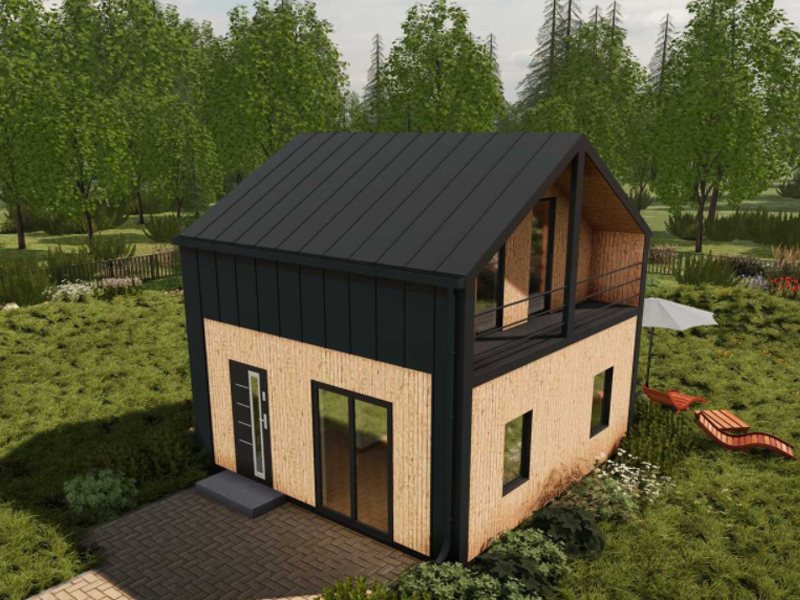
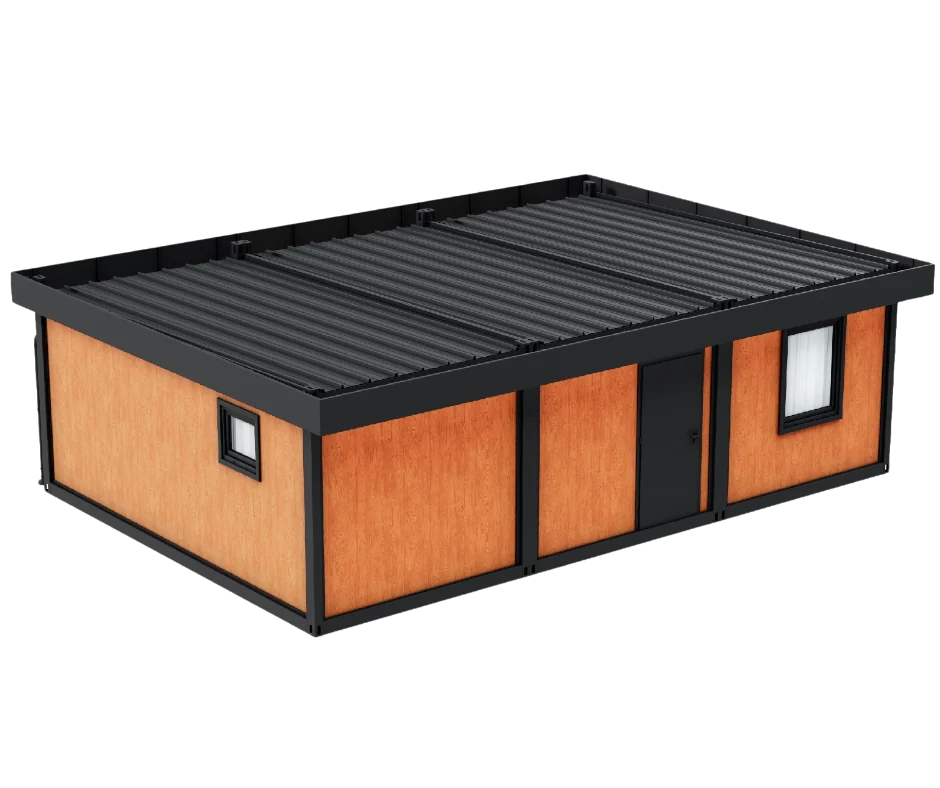
The cottage modular | Ultramodula
Short implementation time of modular buildings
In today's dynamic world, where time has become one of the most valuable resources, every minute matters. In the context of construction, where time is real money, modular building systems bring tangible benefits thanks to the speed and ease of assembly. These features not only translate into lower overall construction costs, but also reduce losses related to the loss of potential benefits, both for enterprises that temporarily suspend their operations for the duration of the investment, and for private individuals who avoid long-term waiting to build their own premises. and incur rental costs during this time.
In practice, constructing a small residential building or a commercial pavilion using modular construction systems is a matter of weeks, sometimes even just a few days. Adapting the functional layout of the interior to the investor's individual needs and expectations often takes the longest. The "construction" process itself at the final location is truly rapid, especially once the foundation (made of prefabricated blocks) is ready and the necessary installations are ready. A container building , thanks to the use of a crane or a truck with a crane, can be erected in a designated location in literally a few minutes.
Of course, in the case of larger objects consisting of several or even several dozen modules, this process will be correspondingly longer, but still significantly shorter compared to traditional methods, such as building with bricks. The speed and efficiency of assembly also reduce the risk of unexpected costs resulting from delays that often occur during investments carried out using traditional construction methods.
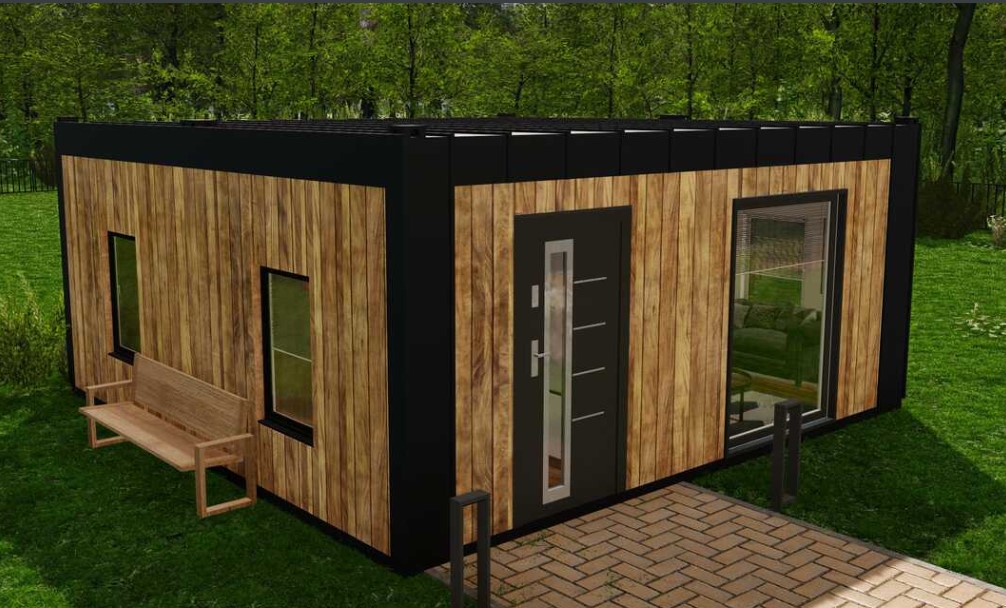
High quality and durability of modular building systems
In recent years, modular construction has gained a very good reputation on the market in terms of quality. Investors and users have realized that modern facilities made of ready-made modules have nothing in common with poor-quality sheet metal structures from several dozen years ago. Modern modular building systems are solutions of much higher quality, which is mainly due to the production process carried out off-site.
Production under controlled conditions
The key element ensuring the quality of modular structures is production under controlled conditions. Individual elements of the facilities are manufactured in production halls under fully monitored conditions, using advanced equipment and in accordance with applicable standards and construction norms. The entire structure is created in an environment with precisely controlled temperature, humidity and dust-free, thus minimizing the risk of errors. Assembly of components such as doors and windows in a factory setting also provides greater precision and better quality control. A significant impact on the quality and durability of modular buildings is the fact that they are delivered to the assembly site fully equipped with all necessary installations: electrical, water, sewage and heating. Each element is carefully made in controlled factory conditions by experienced professionals.
Appropriate design and materials
Another advantage that distinguishes modular objects is their design, which is characterized not only by wide arrangement possibilities, but above all by durability and made of the highest quality materials. This means that buildings based on this technology can be used in commercial, residential and industrial facilities.
Starting from the top, a key element of high-quality modules is the roof. Its robustness is based on the use of durable sheet metal. This type of roofing not only ensures durability but also gives the buildings a modern look. Importantly, the sheet metal is available in a variety of RAL colors, allowing the design to be tailored to the investor's expectations. The appropriate roof pitch is also crucial, allowing for the free runoff of snow and rain. For modular homes, the most common pitch is 30%, while in container buildings , the roof is almost flat (2%). Reputable manufacturers guarantee solid roof insulation, crucial for efficient winter heating. The optimal design includes a 100-200 mm thick mineral wool insulation layer, combined with a roof membrane and a vapor barrier.
Moving on to the lower part of the structure, the foundation for the entire structure's strength is the solid welding of the steel sections. Cold-formed, 4 mm thick sections are preferred, and the columns are bolted to the upper and lower frames. The walls of the buildings, using modular construction systems from renowned manufacturers, ensure an effective heat transfer coefficient, achieved through the use of mineral wool insulation. This not only guarantees durability but also effective protection against heat loss, ensuring comfortable living conditions year-round.
scalability
Modular building systems enable the seamless addition of new modules to existing buildings. This is not only convenient but also an optimal solution, allowing for the ability to expand usable space at any time. Whether it's a shop, restaurant, or office , modular containers allow for dynamic adaptation to changing business needs. Importantly, expansion isn't limited to width alone—building extensions are also possible. The high-quality construction of these containers allows for stacking, further increasing the spatial and functional flexibility of modular buildings. This flexibility, which is absent in buildings constructed using traditional methods, makes adapting space to current needs and market trends extremely easy and cost-effective. Scalability, therefore, becomes a key factor in enabling effective space management while also protecting against future challenges and changes that will undoubtedly come.
Modular building systems – a revolution compared to traditional methods
Nowadays, when the dynamic development of society and economy poses new challenges for us, a revolution in the field of construction is inevitable. Traditional construction methods, although proven and reliable, often fail to keep up with the demands of today's rapidly changing world. In this context, modular building systems, especially in the form of containers, are entering the scene as an innovative solution that not only meets but exceeds expectations in terms of efficiency and economy.