
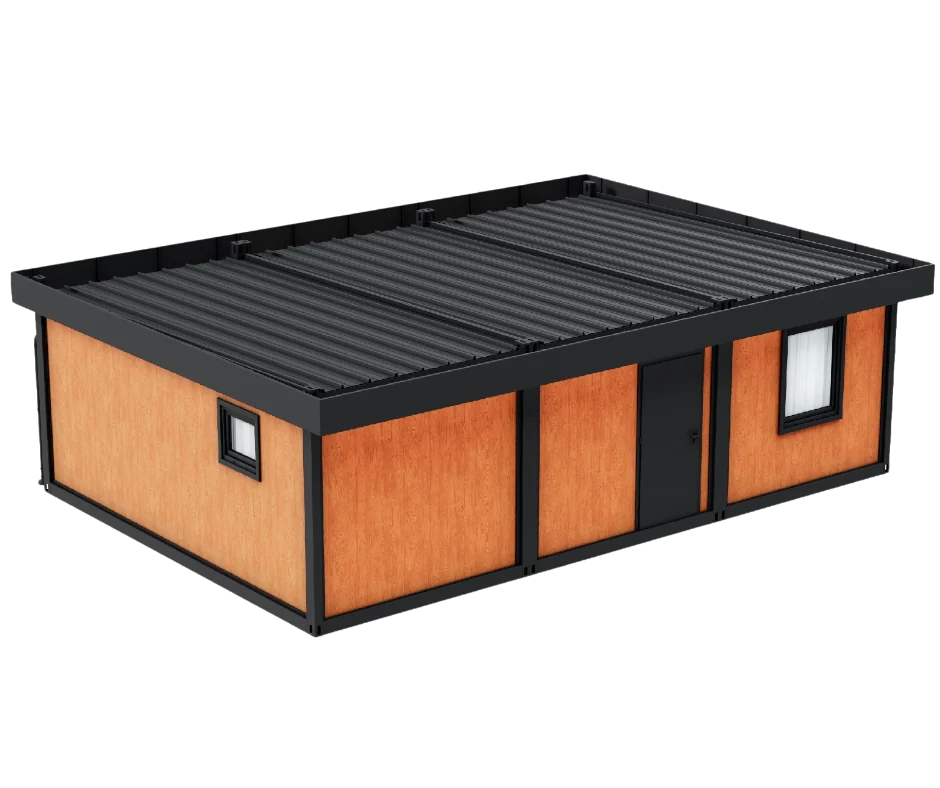
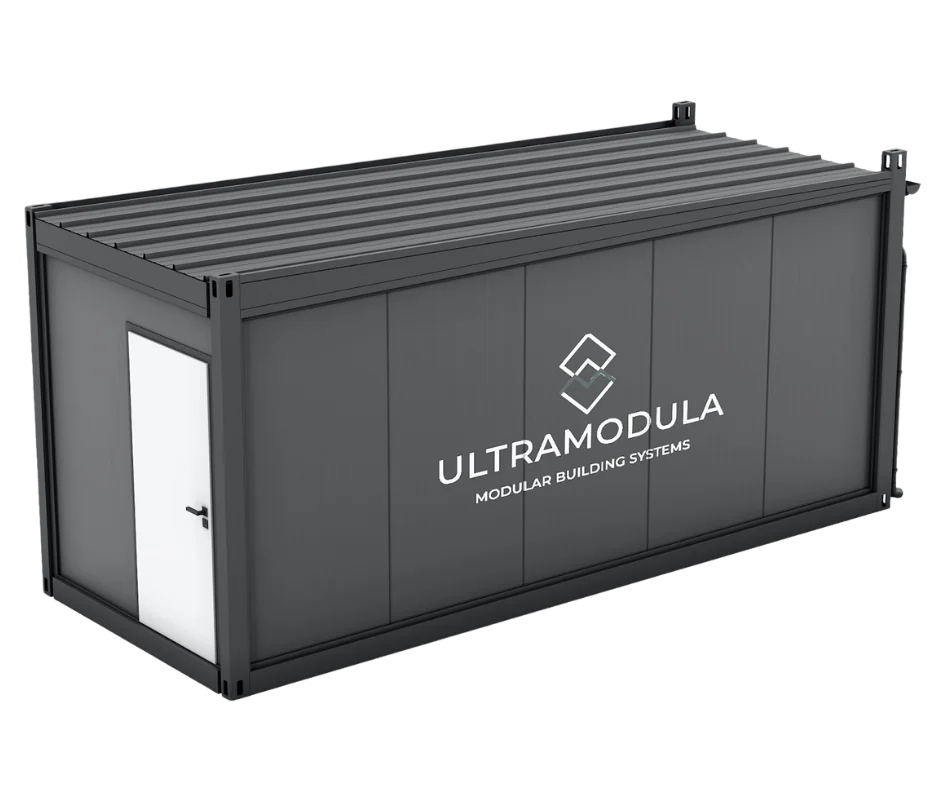
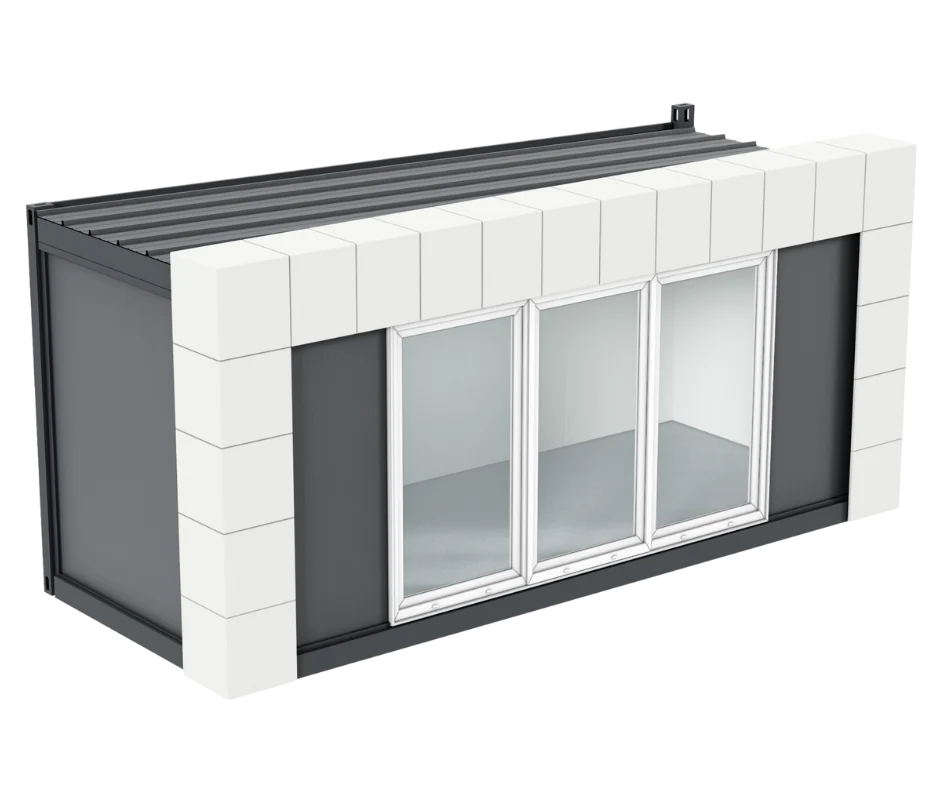
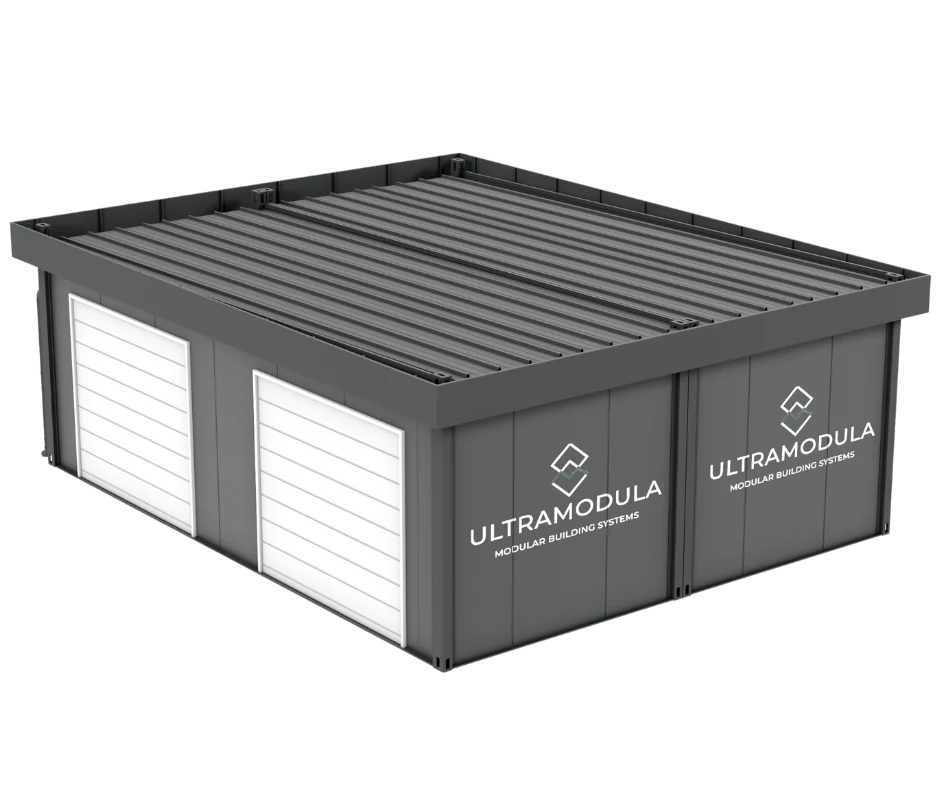
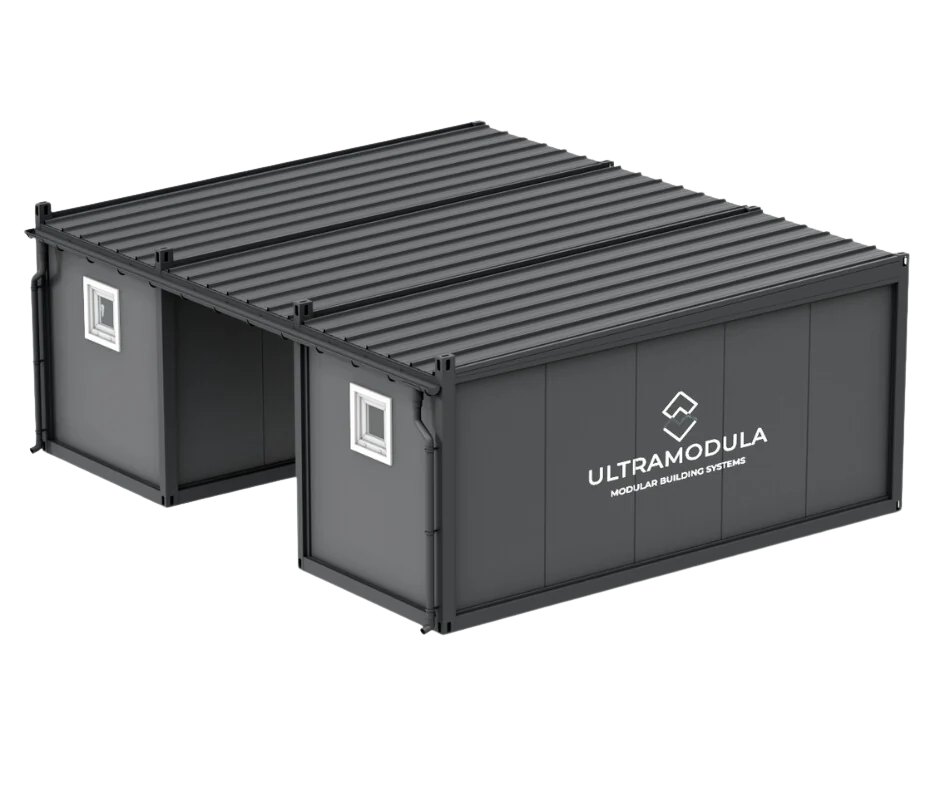

Container school visualization | Ultramodula
Containers as mobile kindergartens and schools
Today, childcare and education require innovative solutions that can meet society's rapidly changing needs. One of the latest trends is the use of containers as mobile educational facilities – both preschools and schools. While this idea may initially seem unconventional, it is gaining popularity, especially in areas where traditional buildings are difficult to access and the need for rapid creation of educational spaces is urgent.
Advantages of containers in education
Containers are incredibly versatile and can be adapted for a variety of purposes. They offer numerous benefits in the context of education and childcare:
1. Fast building and mobility
Traditional school and kindergarten buildings may require many months construction and significant financial outlays. Containers are a much cheaper and faster alternative. They can be assembled and adapted within a few weeks, which allows for a quick response to the growing demand for educational places. What is more, containers are mobile, which means they can be relocated as needed, e.g. to new settlements, rural areas or zones affected by natural disasters.
2. Adaptation to educational needs
The containers are easy to modify, allowing them to be adapted for different purposes. For kindergartens, they can be equipped with colorful, safe play areas, nap areas, as well as kitchens and bathrooms. For schools, they can be equipped with interactive whiteboards, student tables and chairs, and ventilation systems, heating or air conditioning to ensure comfort all year round.
3. Ecological and sustainable solution
The use of containers is part of the increasingly popular trend of green construction. Containers are structures that can be recycled and reused. When an educational project is completed, containers can be moved to another location or used for another purpose, which reduces the amount of construction waste and reduces the impact on the environment.
4. Flexibility in development
In some places, especially in developing regions, the education system must cope with rapidly changing child populations. Containers allow for easy adjustments to classroom capacity based on needs, including adding new modules or relocating parts of the facility to other locations. This is particularly important in areas where the child population increases or decreases rapidly.
Examples of using containers in education
1. Kindergartens modular in cities
In large cities, where space for development is limited, containers can serve as a temporary or even permanent solution for kindergartens. In the Netherlands and Germany, mobile kindergarten projects are being successfully implemented, which offer all the necessary facilities for children while taking up little space. Instead of waiting for a new school or kindergarten, which can take many years to build, city authorities can quickly create such temporary facilities.
2. Schools in regions affected by natural disasters
After natural disasters such as earthquakes, hurricanes or floods, educational infrastructure is often destroyed. Containers are an ideal temporary solution, allowing children to quickly resume learning. For example, projects implemented in countries such as Nepal, where after the 2015 earthquake, containers were used as temporary schools until the traditional buildings were rebuilt.
3. Schools in rural and hard-to-reach areas
In developing countries, where educational infrastructure is not sufficiently developed, containers make it possible to reach places with education that were previously excluded from it. In rural areas, where building permanent schools may be unprofitable or difficult to implement, educational containers can provide a permanent solution.

Container kindergarten visualization | Ultramodula
Challenges and the future of educational containers
While containers offer many benefits, there are also challenges associated with their use in education. One of the main issues is adapting such facilities to changing climate conditions. Proper insulation and ventilation systems must be provided to ensure children are comfortable, especially in extreme temperatures.
Another challenge is to ensure that such temporary solutions do not become permanent, replacing traditional educational buildings. While containers can last for many years, it is crucial not to abandon the construction of permanent facilities where possible.
In the future, containers could become an integral part of educational systems worldwide. The use of modern technologies such as solar panels , intelligent energy management systems , and advanced construction materials could make containers even more ecological and functional.
Using containers as mobile kindergartens and schools is an innovative solution that allows for a quick and effective response to educational needs in various locations. Thanks to their flexibility, mobility and environmental friendliness, containers can be used in cities, rural areas or areas affected by natural disasters. Although this approach faces challenges, the prospect of their use in education seems promising. With further technological development, containers can play a key role in shaping the future of education around the world.