

Ventilation and air conditioning solutions for container buildings
The modern construction world has undergone a significant transformation in recent years, with a focus on flexible, mobile, and cost-effective solutions. In this context, containers —whether residential , office, or service—have become one of the most popular structures in many industrial sectors. Their popularity is constantly growing, due to their accessibility, functionality, and cost-effectiveness. However, for such buildings to meet user expectations and, consequently, be effectively used for both residential and commercial spaces, ventilation and air conditioning systems are a key element of their design and operation.
Comfort comes first
An effective ventilation and air conditioning system is an essential element of any building, including a container building . It significantly impacts the comfort of its occupants. Ventilation and air conditioning play a crucial role in residential and office container buildings, particularly due to their unique design. Residential and office containers are primarily made of steel and are characterized by a very airtight structure, which is both an advantage and a challenge in terms of air circulation. The lack of appropriate solutions makes it impossible to ensure thermal comfort, and without them, the container cannot be designed for extended occupancy.
Too hot…
In the summer season, or in places with significant sunlight, steel containers without effective air conditioning and ventilation may turn into "ovens", and too high temperatures may lead to a number of health problems, such as:
- overheating of the body, which may cause heat stroke or dehydration;
- serious discomfort and decreased productivity, or to put it simply: high temperatures cause general discomfort, which can significantly reduce employee productivity in containers offices, as people become more lethargic and much less focused in conditions of extreme heat;
- respiratory difficulties resulting from deteriorating air quality in excessive heat, the ventilation system is crucial here to remove pollutants and provide fresh air.
…or too cold
In winter, it's crucial to ensure an adequately high temperature for residents and employees. On the one hand, this is required by occupational health and safety regulations: as defined in the Regulation of the Minister of Labor and Social Policy on general occupational health and safety regulations, paragraph 15, " Workplaces and their furnishings should provide employees with safe and hygienic working conditions." In particular, workspaces should provide natural and artificial lighting, appropriate temperature, air exchange, and protection from moisture, unfavorable heat and sunlight, vibrations, and other factors harmful to health and nuisance. On the other hand, it simply affects human health – too low a temperature can weaken the immune system, increasing the risk of various diseases, leading to colds and even much more serious conditions.
The lack of adequate thermal insulation and a tight ventilation system also leads to increased heating costs for such buildings. Therefore, it's essential to purchase a container from a reputable manufacturer whose design incorporates optimal insulation: reputable contractors use mineral wool combined with a vapor barrier. For effective insulation, the mineral wool should be approximately 100 mm thick. Furthermore, another layer of insulation is a laminated board attached to the inside of the container.

Ventilation and air conditioning solutions for container buildings
The role of ventilation and air conditioning systems for container buildings
In addition to ensuring comfort for container users , appropriate ventilation and air conditioning systems perform other important functions.
User health
Firstly, they "take care" of the health of residents and employees using container buildings. Effective ventilation removes pollutants, while providing fresh air and minimizing the risk of allergies or respiratory diseases. Such a system works as a filter that eliminates harmful substances from the air, such as dust, allergens, viruses, bacteria and even harmful chemical vapors. This protects people from inhaling substances that may harm their health. Equally important is the constant supply of fresh air from outside to the interior of the container - this ensures optimal air quality in the rooms and prevents the accumulation of unpleasant odors.
Improving air quality through an effective ventilation system can significantly reduce the risk of allergies, asthma and other respiratory diseases. It also reduces the risk of contracting droplet-borne infections, which is especially important in situations where many people stay in one container building (e.g. an office or shop).
Protection against moisture
A properly designed and configured ventilation system not only protects against moisture-related problems but also maintains appropriate air quality within a container building. This is a key factor in ensuring the comfort and health of occupants and, in the long term, can significantly contribute to the long-term durability of the structure. During autumn and spring, air temperature and humidity fluctuate significantly between day and night, making condensation a serious problem. When warm, humid air encounters cooler surfaces inside the container, it can condense, creating conditions conducive to the growth of mold and mildew. This not only leads to unsightly stains but can also damage structural materials and interior furnishings. An effective ventilation system can effectively manage air humidity in containers. Here's how it works:
- removes excess moisture,
- ensures cyclical air exchange,
- monitors and controls the humidity level.
Reduction of fixed costs
Economy is one of the key aspects that support investing in efficient ventilation and air conditioning systems in container buildings. The introduction of an effective ventilation and air conditioning system allows for better control over energy consumption. As a result, costs related to heating, cooling and air circulation are significantly reduced. It has a huge impact on the overall operating costs of the building and translates into significantly lower energy bills.
The most popular ventilation solutions for container buildings
There are several different types of ventilation systems that can be used in container buildings. Each of them has its own unique features and advantages, which allows you to adapt the solution to specific needs and conditions. The basis, of course, is natural ventilation, i.e. the simplest type of ventilation, which is based on the use of natural gravitational forces and temperature differences to exchange air. Although it sounds complicated, it involves such basic solutions as windows and other opening glazing, as well as ventilators. This is an economical and ecological solution, but not always sufficient in the case of larger containers or places where there are a lot of people.
A more complex solution is a variety of mechanical systems that primarily use fans for active air exchange. They can be adapted to containers of various sizes and provide greater control over air flow. Their main "disadvantage" is the need for electricity, and therefore: operating costs.
Modern heat recovery systems are becoming increasingly common, particularly in residential containers. They enable more advanced energy management and significant savings on heating and cooling bills. In container buildings equipped with a mechanical ventilation system with heat recovery, fresh air is drawn from the outside into the ventilation ductwork. It then travels to the heat exchanger of the heat recovery unit, warming up the air while simultaneously extracting it from the building's interior. As a result, residential container users can enjoy a warm and comfortable interior without high energy costs. This is an effective energy-saving solution.
Ventilation and air conditioning solutions for container buildings
Air conditioning solutions for container buildings available on the market
Choosing the right air conditioning system for container buildings depends on many factors, such as the facility's size, functional purpose, climate, and available power sources. Professional consultation and installation are crucial to ensure the system's efficiency and reliability. With the right approach, container buildings can be comfortable and pleasant places to live or work, regardless of external conditions.
Split air conditioning
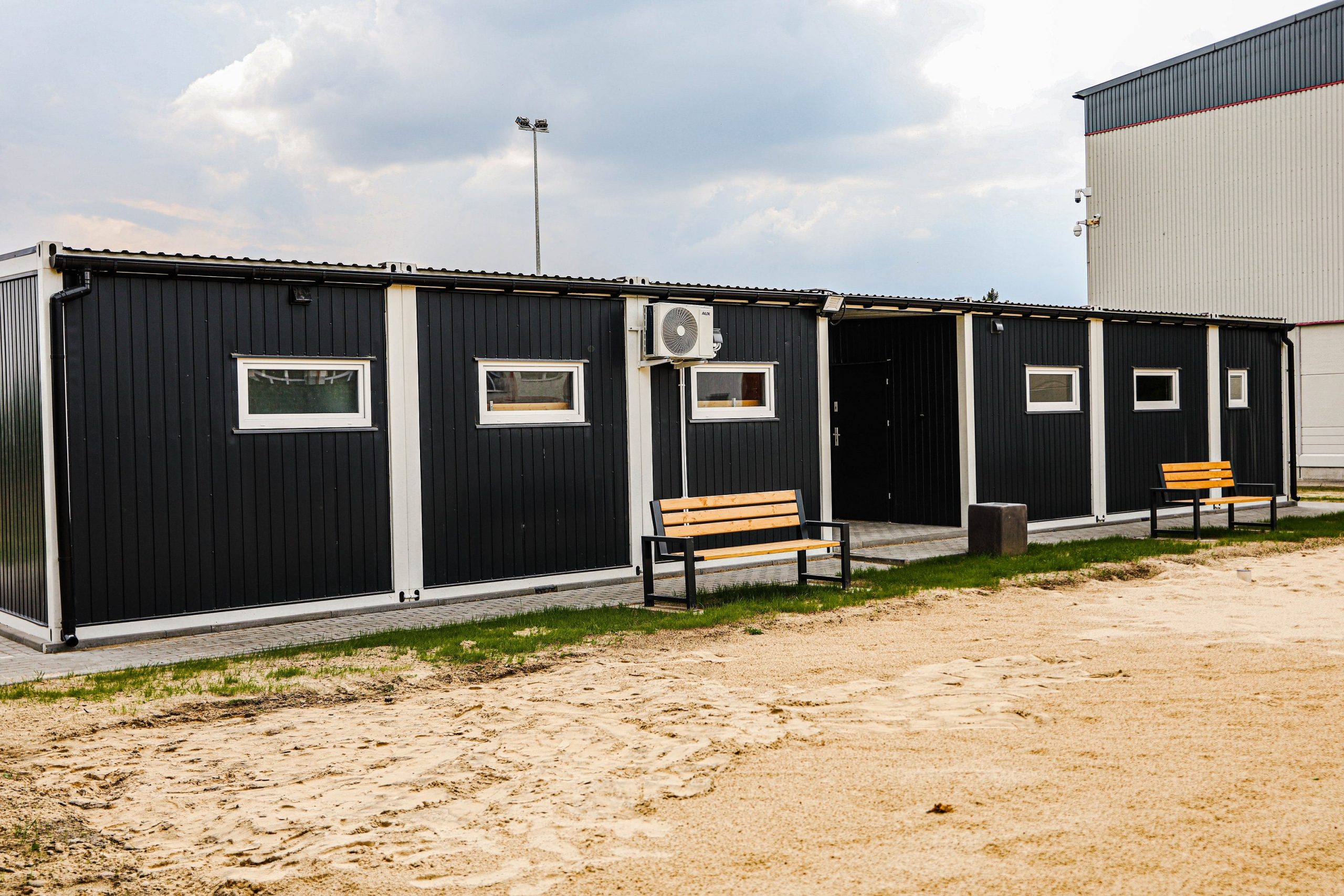
This is one of the most popular solutions for residential and office containers. It consists of two main components: the indoor unit, which is placed inside the container, and the unit, which is mounted outside. The system works by circulating cool air inside the container and, importantly, it is relatively simple to install and maintain. It requires access to electricity and, unfortunately, is not economically effective.
Portable air conditioning
Small, portable air conditioning units are convenient and easy to use. They can be moved from one room to another as needed, which makes them a flexible solution. However, their performance is somewhat limited and they also generate a lot of noise.
Cassette air conditioning
Cassette air conditioning is an ideal system for office pods . It's mounted on the ceiling and directed indoors, allowing for even distribution of cool air throughout the office . This system is aesthetically pleasing, but unfortunately, it's a bit more complicated to install than, for example, split-type air conditioning.
HVAC air conditioning systems
HVAC systems (which stand for Heating, Ventilation, and Air Conditioning) are more advanced solutions that combine heating, ventilation, and air conditioning in one system. They can be tailored to the specific needs of a container building and allow for precise temperature and air quality control. They are more expensive to purchase and require regular maintenance.
Ventilation and air conditioning are a key investment
Effective ventilation and air conditioning systems significantly affect the comfort of container users, regardless of their purpose. Especially in the case of residential and office containers, these systems are essential for the health and comfort of the people staying in them. Modern solutions, such as ventilation systems with heat recovery and advanced air conditioning systems, allow for even better management of comfort and energy consumption. Thanks to the appropriate approach and advanced technologies, buildings can become more and more energy-efficient, environmentally friendly and comfortable for users, regardless of external conditions.