
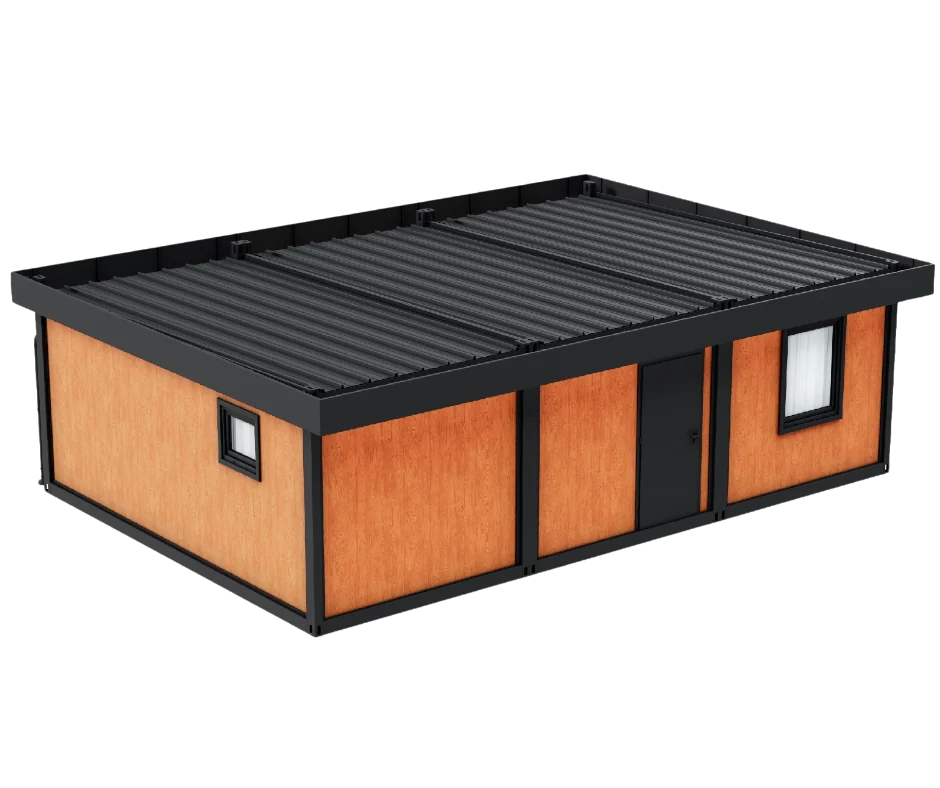
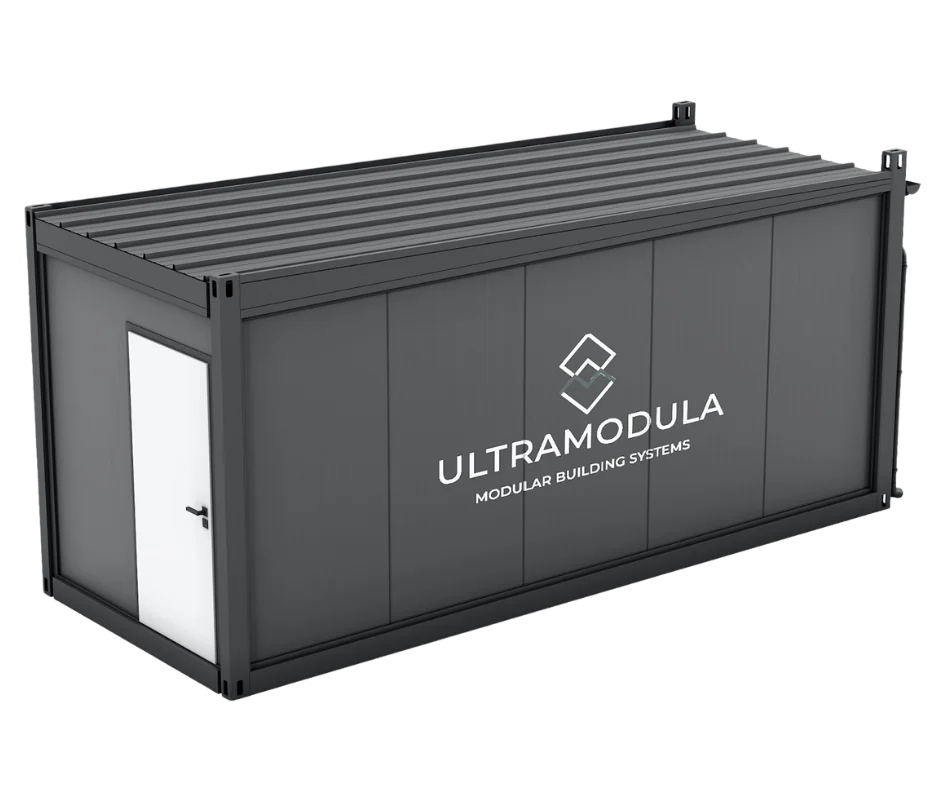
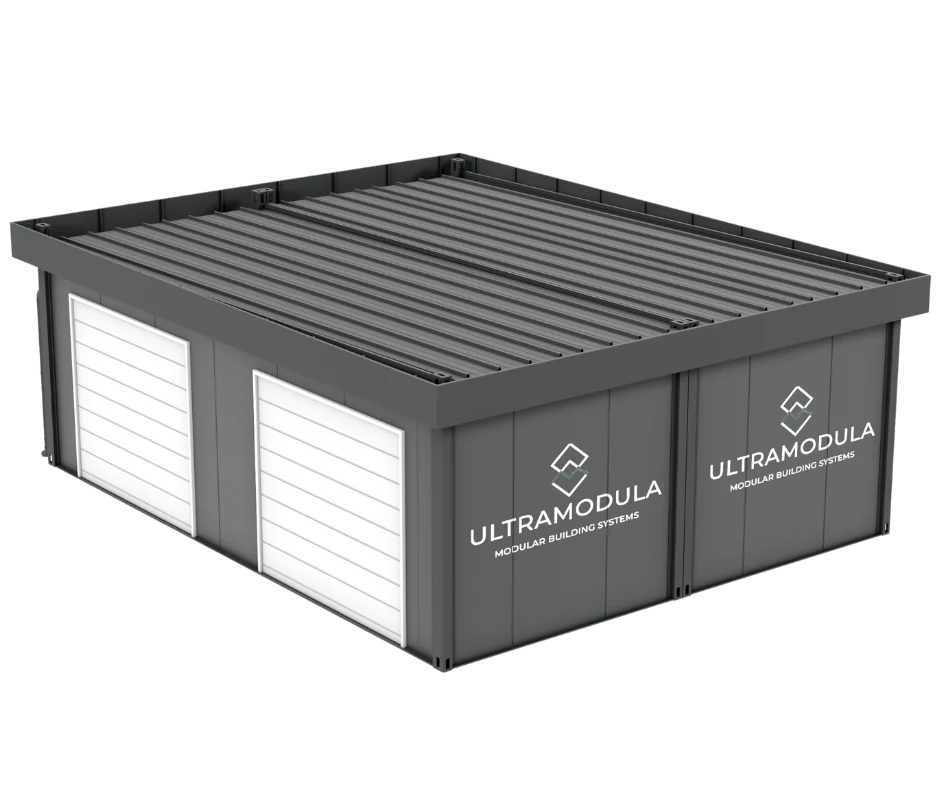
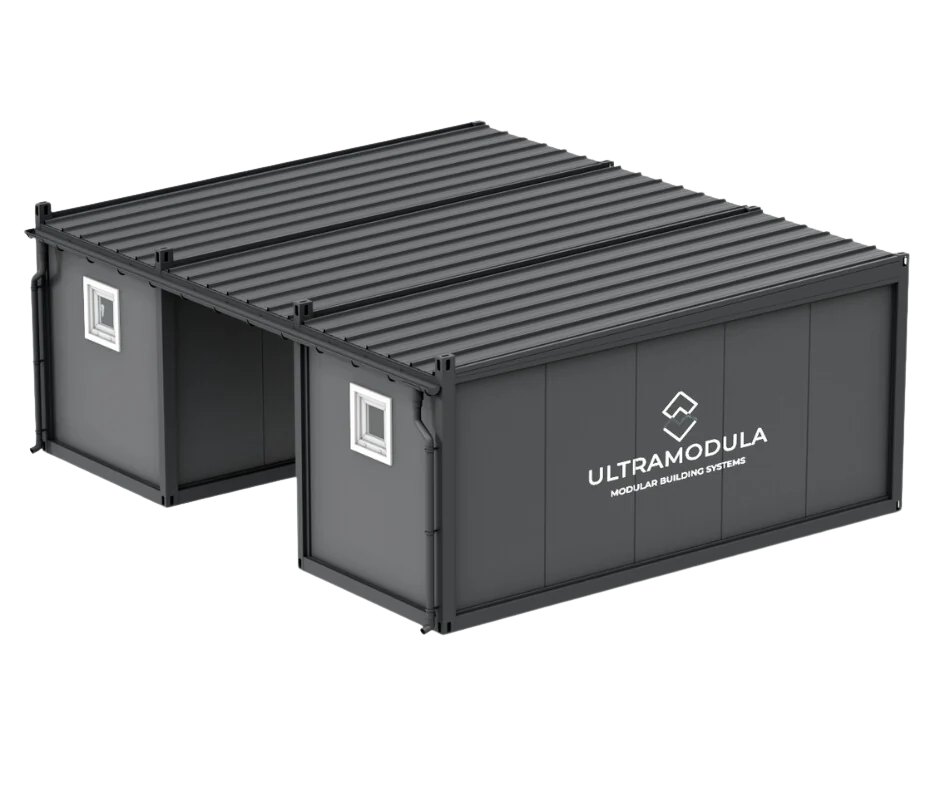
From Egyptian pyramids to modular containers , construction thrives on regular shapes. Ancient builders built their works based on blocks and elements with repeatable dimensions. Contemporary industrial architecture has taken this regularity to the next level. Creating larger and smaller structures using "blocks" such as modular containers offers virtually unlimited possibilities for quickly constructing a building for any purpose. Their multitude of types and ease of connection mean that a fully functional office, shop, or even a hotel can be built from scratch in a short time . How is this possible?
What's inside a modular container?
To understand the phenomenon of modular containers , it's first necessary to understand their construction, as it's key to their success. They are manufactured using a frame with standardized dimensions made of steel sheets. The container walls, in turn, consist of interchangeable panels of various types: doors, windows, or simply solid panels. These panels can be positioned according to needs; for example, doors can be integrated on the shorter or longer side, and the number of window panels can be varied depending on the container's intended use . A key detail of modular container systems is the tie-down brackets used to connect them.

Frame and floor - a stable solution
For a container to be stable and stackable, its structure must be exceptionally strong. In high-quality models, the frame is welded from cold-formed sections at least 4 mm thick, and the columns are made from solid sections (also cold-formed). To reinforce the entire structure, they are bolted to the top and bottom frames.
In order to stiffen the entire body of the container, the floor is made of OSB boards - its thickness should be about 20-22 mm. The insulation from the ground is made of a layer of mineral wool with a vapor barrier foil, and the inside of the floor is finished with a PVC lining.

Tight walls and roof
The lightweight nature of modular containers comes from trapezoidal sheet metal walls and roofs. This durable yet relatively lightweight material makes the entire structure easier to transport and allows for stacking containers. Depending on the building's intended use, the walls can be insulated with 50 to 100 mm of mineral wool. A vapor barrier is also used to protect against moisture. It's worth paying attention to the interior wall finish – in high-quality containers , especially those intended for offices or retail spaces, this is usually an elegant white laminated board.
As you know, most of the heat escapes through the roof (didn't mom say always wear a hat in winter?). That is why it is so important to insulate this part of the container. As in the case of walls, mineral wool is used, protected with a vapor barrier foil.
A window and a door to the world

Windows are a crucial element for the functionality of containers. Depending on the intended purpose of the building, there may be more or fewer of them. On the one hand, more window panels provide better interior lighting and improved visibility from the container. On the other hand, a large number of windows increases the visibility of what's going on inside for outsiders. Because the containers are set relatively low, viewing inside is easier. Regardless of the number of windows, modern PVC window joinery is crucial.
As for the entrance, it is usually mounted on the short side. Such a solution often ensures better positioning of the interior of the container. Steel doors with standard dimensions of 90 × 200 cm are most often used.
Modular container and what's next?
The construction of mobile containers allows for the construction of extensive structures, both single- and multi-story. They can be used to create entire, large buildings, but what can they actually be used for?
Types of modular containers – Depending on their purpose, modular containers can be divided into several basic groups:

Of course, the method of using containers is limited only by the human imagination (or the requirements of the Sanepid;)), but the above list is the most popular areas of their application.
On the construction site ...
During large-scale investments, such as road construction, housing developments, large-scale sports and commercial facilities, etc., containers can be used for a variety of purposes. They can serve as construction offices – in which case, standard containers with window panels and nicely finished floors and walls are most effective. Another popular solution is changing rooms and facilities for employees. Containers provide spaces where employees can not only change before and after their shifts but also relax during lunch breaks.
On construction sites, containers are also used as handy storage for small construction equipment.
… And in the office

Due to the rising costs of office space rentals and trends in modern industrial architecture, small container offices are becoming increasingly popular . These are unique solutions, quick to implement, and because they are not permanently attached to the ground, they can be installed both outdoors and indoors in larger facilities, such as exhibition halls or sports stadiums.
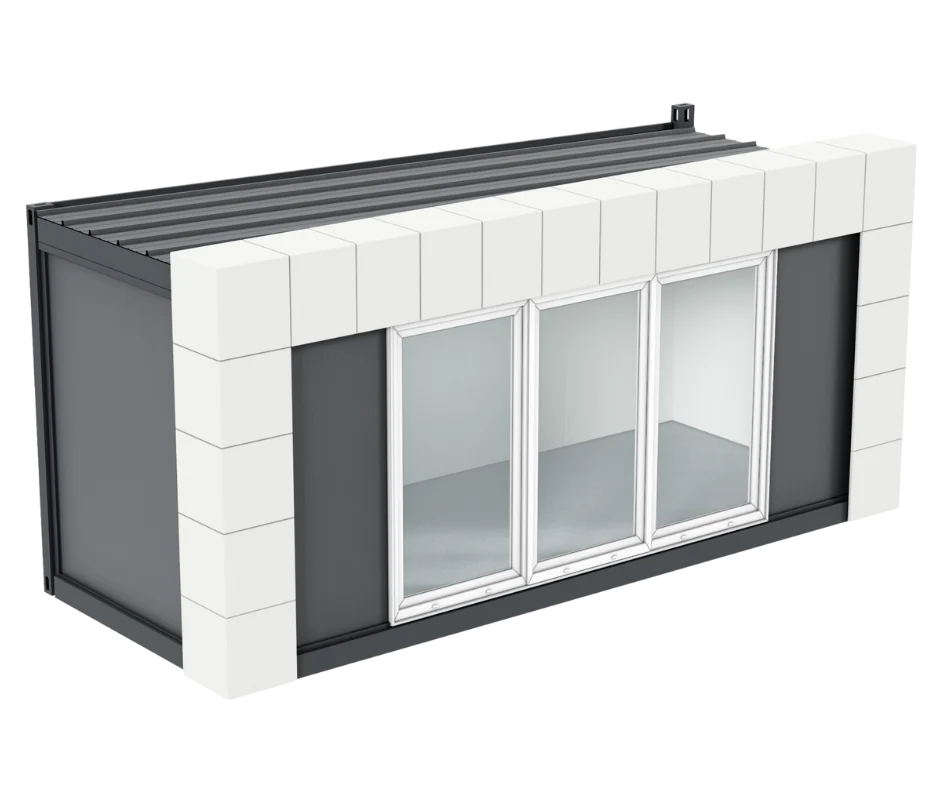
An interesting version of office containers are so-called pavilions , which often feature entire wall panels made of glass. This creates an interesting visual effect, but is also functional, as the office in such a pavilion is optimally lit, and despite the small space, there's no discomfort.
Small footprint, maximum possibilities
Mobile containers , although small in size, offer a wide range of service applications. A properly configured module can accommodate everything from a clothing store to a flower shop or beauty salon. Assembly of a container-pavilion is quick and easy, making it easy to relocate to another location when needed. Costs are also a significant factor in running a business. Using a container as a shop or service outlet is a cost-effective solution.
Apartment?
Insulated and equipped with modern windows and sanitary facilities, containers can be a solution for social housing needs , as well as an excellent summer home. Each of these options places construction cost as the primary criterion when choosing a solution. Modular containers are an affordable alternative to, for example, wooden log cabins.
When it comes to broadly understood residential functions, a hotel for construction workers can even be built by combining the appropriate number of containers.
With or without a bathroom?
As we know, no home or hotel can function without a bathroom. Many modular sanitary containers are available on the market. They are equipped with toilets, showers, and sinks. They can not only complement a typical residential structure but also provide a higher-quality alternative to popular toilets. This solution can be successfully used on construction sites, in highway parking lots, or during festivals and sporting events.

There is no end in sight
There are countless applications for modular containers. Their versatility, simple design and an appropriate price make them gaining in popularity. Good quality products are not only well finished and comfortable to use. They are also durable and long-lasting.