
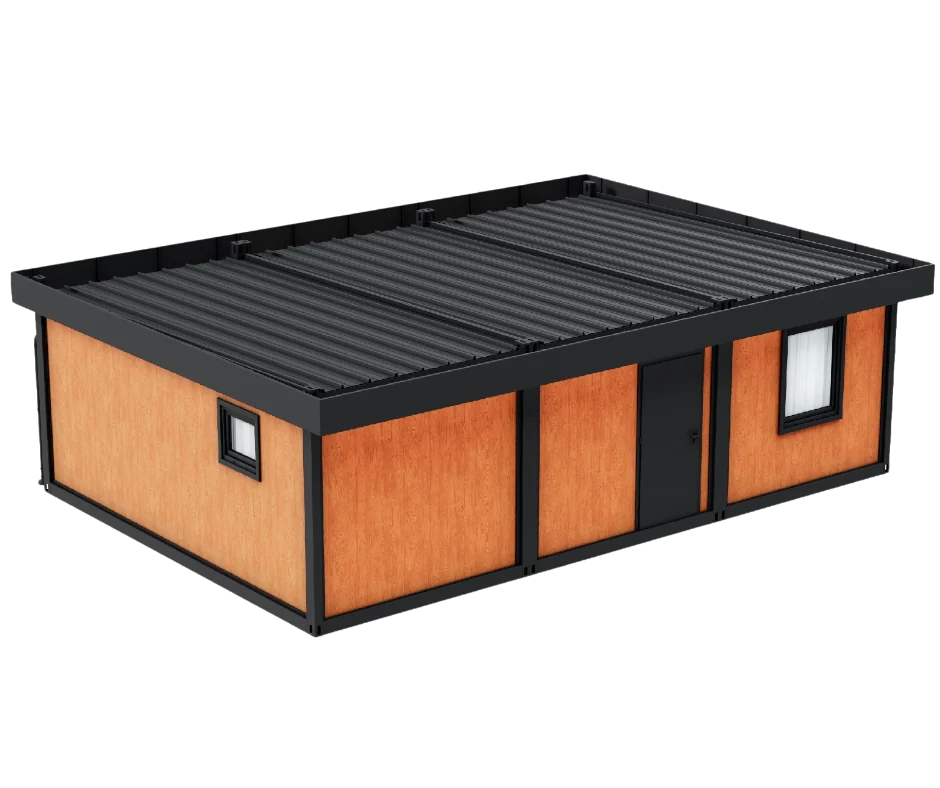
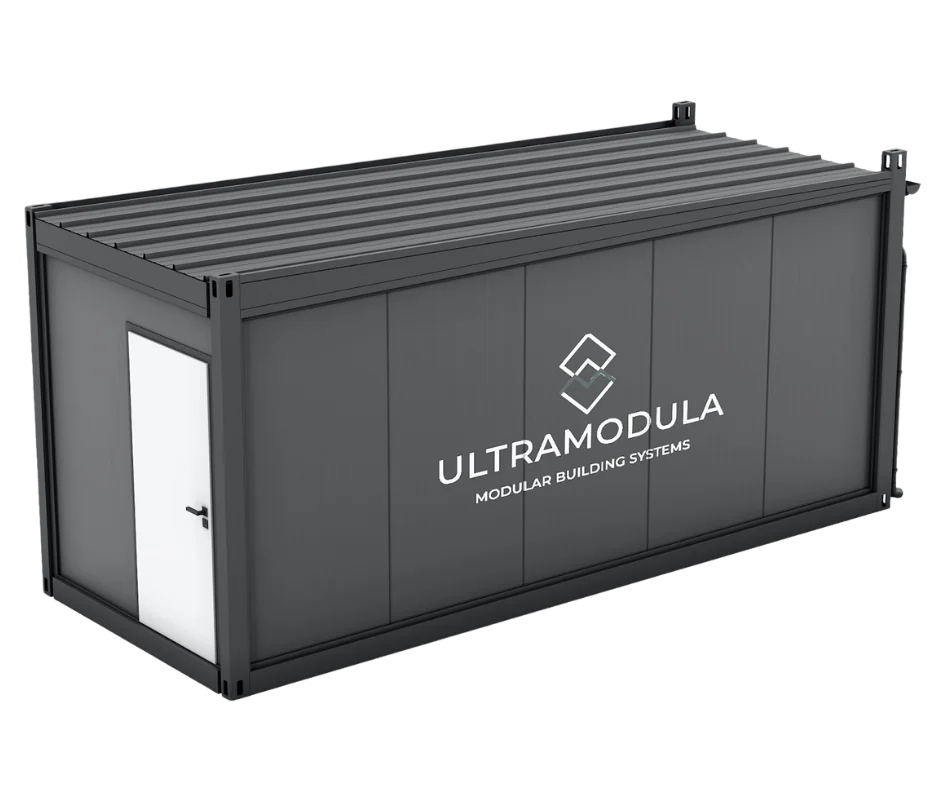
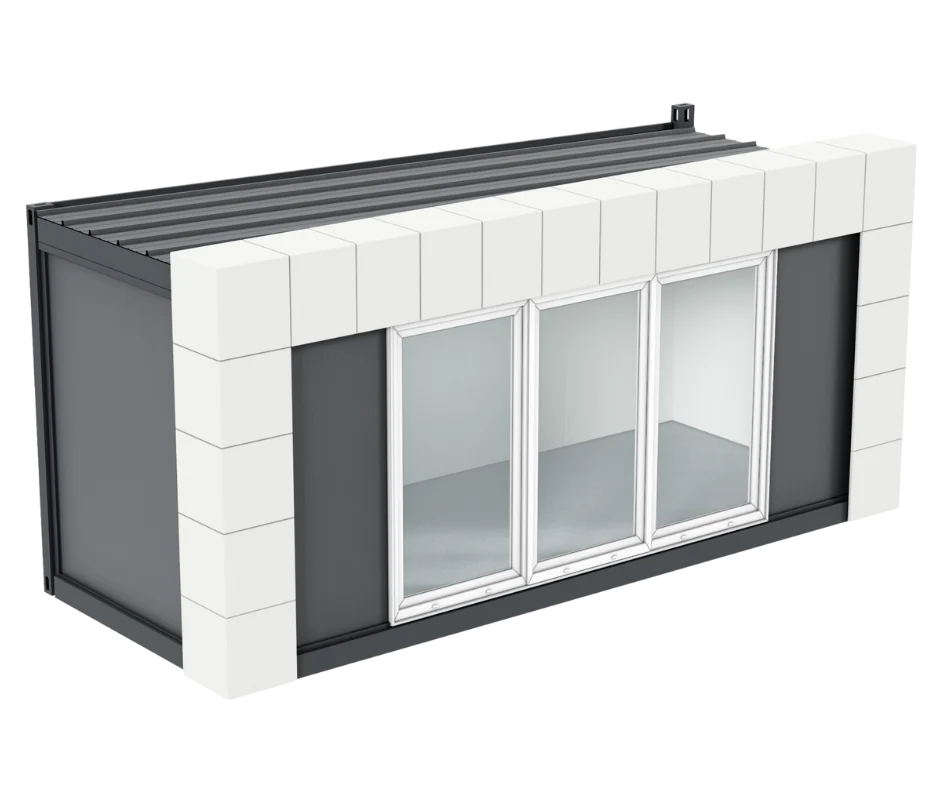
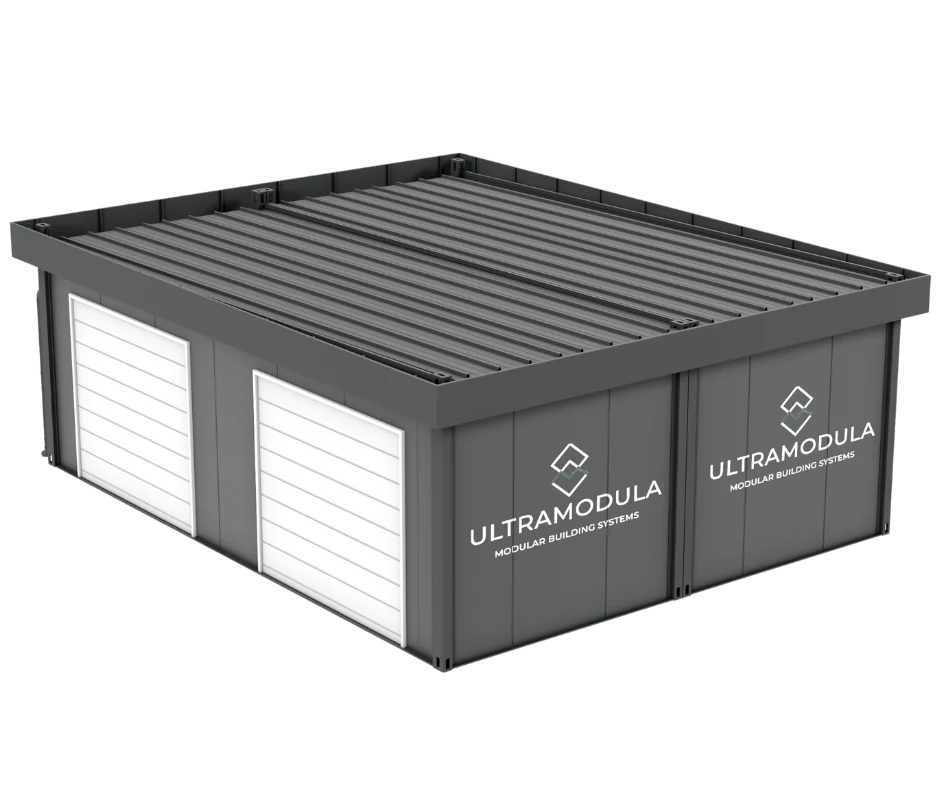
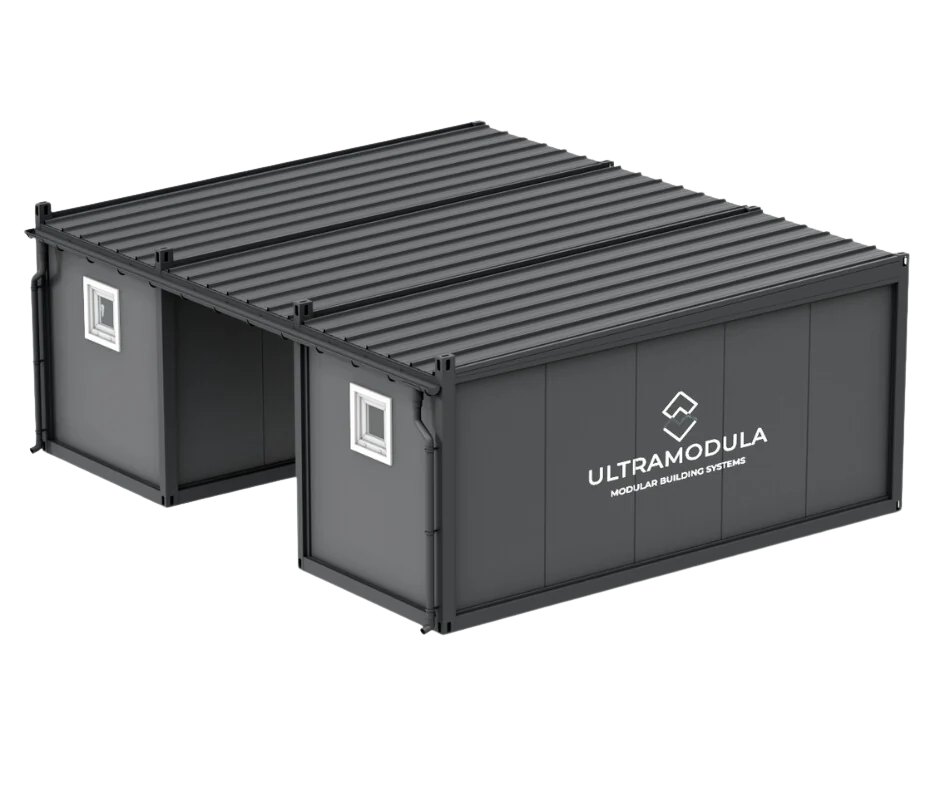
Teddy bear season, mushroom picking season, ski season, heating season… what do they all have to do with containers ? This is, of course, tongue-in-cheek, but many industries operate in seasonal cycles, most often linked to the season. This includes tourism in its broadest sense, of course, but also the construction, cultural, and food industries. Container buildings are an excellent solution for each of these as seasonal facilities, such as service offices, shops, bars, and many, many others.

Gastronomic pavilion | Ultramodula
Why choose container buildings?
As seasonal facilities , containers offer many advantages stemming directly from their design. These include:
- mobility
- ease of assembly and disassembly
- low purchase or rental price
- low maintenance costs (during use and storage)
Because mobility matters

mobility containers | Ultramodula
The basic premise of seasonal buildings is their seasonality, meaning they are only used for a specific (usually short) period. After this period, the building is moved to a storage location until the next season. Therefore, a key feature that a building designed for short-term operations must possess is mobility. Ease of transport, which translates into lower costs, is the most important advantage of containers over other solutions. Moving a container from one location to another doesn't require specialized equipment—a truck with a crane is sufficient.
Because they are easy to assemble and disassemble
After mobility, the second fundamental requirement for seasonal structures is the ability to be easily and quickly assembled and disassembled. Containers, unfortunately, lack this capability, simply because there's no need for it. Their great advantage is that they can be easily transported as a whole. Furthermore, they can be stacked, but only if properly constructed. Reputable manufacturers use welded frames made of 4 mm thick cold-formed sections, and to ensure the pavilion's strength, the columns bolted to the upper and lower frames are made of solid sections (preferably cold-formed, also 4 mm thick).
Because the purchase (or rental) price is attractive
An investment in seasonal infrastructure must be well thought out - the relatively short period of its operation during the year means that the return on costs is calculated differently than in the case of facilities used on a continuous basis. The advantage of containers is their price, both for purchase and rental. For really little money you can get a fully functional building with sanitary facilities and full electrical installation.
Check out our store's offer: https://ultramodula.pl/sklep/
Because their maintenance costs are low
Seasonal buildings, regardless of the industry, always have one thing in common: they spend a significant portion of their time unused. Therefore, it's crucial that their storage during the dormant period is both simple and cost-effective. Heating is particularly important here – if the building is used exclusively in the summer, it should be possible to winterize it without incurring the costs associated with maintaining a positive temperature. Container buildings easily meet this requirement. Their steel structure and trapezoidal sheet metal walls are weather-resistant and, unlike, for example, wooden houses , they do not require heating in the winter.
But what if the container building is used in winter? Then costs will still be low. But only if we choose a solution from a proven manufacturer: adequately insulated, with modern, airtight doors and windows. Optimal insulation should include approximately 100 mm of mineral wool combined with a vapor barrier.

Pavilion | Ultramodula
Containers as seasonal objects and building permits
Container buildings are often considered—in popular opinion—to be buildings that can be constructed without a building permit. And indeed, in many cases, this is true. However, it's important to remember that the container itself isn't the determining factor for this interpretation of the law. A wide range of factors influence this interpretation, ultimately determining whether a permit is required or whether a notification to a designated administrative body is sufficient.
In the case of seasonal structures, a key point is that if the container is used temporarily, a building permit will not be required. The term "temporary" has been clearly defined by the legislature. According to Article 29, Section 1, Item 7 of the Building Law, a building permit is not required, (...) the construction of temporary structures not permanently connected to the ground and intended for demolition or relocation to another location – within the time specified in the notification, but no later than 180 days from the commencement date of construction specified in the notification . This clearly indicates that containers can be erected without a building permit, only after notification, and only if they are relocated to another location within six months. Importantly, this location can be within the same plot of land. Therefore, most seasonal structures will meet this criterion.