
Importing from China? Myths and facts
In everyday language, we often use the term "speaking Chinese ," which means that someone is saying or explaining something in a way that is incomprehensible to the audience. The same applies to the transport of goods from China in containers – for many people, it is completely unfamiliar, which has led to a lot of misunderstandings. However, it's worth knowing that this country is one of the world's largest exporters of goods, and the vast majority of products are transported in containers . So what does importing from China look like? Myths and facts about this topic vary. In this article, we'll explain a few of them.
Imports from China in numbers
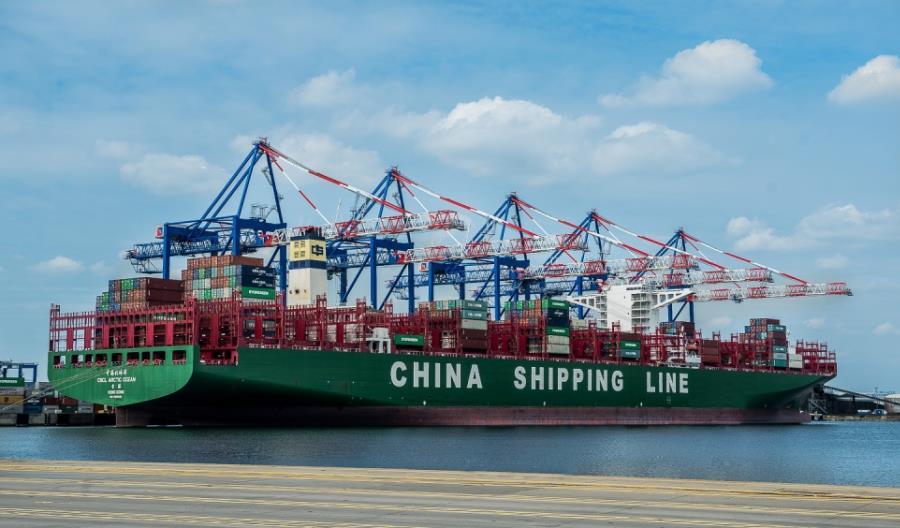
In 2022, China, as in previous years, was the world's largest exporter of goods, with an export value of over $3,5 trillion. The United States and the European Union are the most active recipients of goods produced in China. Container transport is the most popular form of freight transport in both destinations, regardless of type. Interestingly, although shipping containers remains the most popular form of transport, rail transport is gaining popularity year after year. According to data from UTLC ERA (an organization of Kazakh, Russian, and Belarusian railways operating on this trade route), 410,603 TEU of goods were transported from China to Europe by train throughout 2022. Chinese ports transshipped 220 million TEUs during this period, or 220 million units equivalent to the volume of a 20-foot container.

Containers in the port
Fact: Container transport is not only popular, but also profitable
The figures presented above therefore confirm the first common opinion about imports from China. The fact is that container transport (whether by sea or land) is the most popular method of transport because it is efficient and the most cost-effective.
The cost of transporting goods in containers is much lower than air freight or other means of transport. This is because one large-size container ship can deliver very large quantities of goods, which reduces the unit cost. In addition, China has a well-developed port infrastructure and a large number of container ships, which allows it to maintain competitive prices.
Myth: Container transport is only suitable for large goods and requires a minimum order quantity
Although container shipping is associated with large shipments, it can also be used for smaller shipments. This is primarily because a variety of container sizes are available, and many freight forwarders offer less-than-truckload (LCL) services, which allow importers to share a single container with others, reducing the cost of transporting smaller shipments. This form of freight transport also dispels another myth: importing from China requires minimal logistics – if you can "share" a container with other customers, the problem of having to order enough goods to fill an entire container disappears.
Fact: Container transport is safe
Container transport ensures a high level of safety for transported goods, even in harsh weather conditions at sea. High-quality shipping containers manufactured by reputable manufacturers are made of durable steel and are resistant to all weather conditions. It's worth noting that every container intended for maritime transport must meet ISO standards specifying minimum strength requirements. Importantly, it must also be built in accordance with the strict safety criteria outlined in the International Convention for Safe Containers (CSC).
Durable frame
The base element of each container is a steel frame, consisting of corner posts and cross and longitudinal beams. The structure must be strong enough to allow fully loaded containers to be stacked on top of each other. Therefore, cross ribs are attached to the lower longitudinal beams , forming the base of the floor. Long, 40-foot containers also have a special tunnel in the floor, known as a gooseneck , which allows for a lower overall height of the trailer and container.
Tight walls, roof and floor
The walls of the containers are made of trapezoidal sheet metal, and the roofs are made of its profiled version with a thickness of about 2 mm. The entire structure is welded and undergoes demanding leak tests involving directing a stream of water at a pressure of 1 bar directly onto the roof and walls. This is followed by a check that all internal surfaces have remained dry.
An important element of the container is the floor, because forklifts with goods move on it during loading/unloading. It is made of special container plywood with a thickness of min. 25 mm or from boards.
Container doors
The most common container design is one with a door located on the front wall, although models with doors on the long side are also common. Rubber seals ensure the door seals. A standard set of container locks includes: rods, bolts (bolt sockets are welded to the container frame), handles, clamps, and, of course, a customs seal.
Myth: Container shipping from China is bad for the environment
Of course, like any form of transport, transporting goods in containers has an environmental impact. However, it is generally less harmful than other modes of transport, such as air freight or road transport. This is due, in part, to economies of scale: container ships are very large, can transport many goods simultaneously, and therefore emit significantly less carbon dioxide per unit of cargo. Importantly, transport containers themselves are also an ecological solution, because thanks to their durable construction, they can be used for many years, without interruption between shipments.
Fact: Container transport requires proper documentation and preparation
Shipping goods by container from China requires careful planning and preparation. You need to ensure not only the choice of a container from a proven manufacturer, but also find an experienced forwarder who will help you take care of the appropriate transport documents, customs clearance and all formalities. It is worth carefully verifying whether the transport container has all the standards and approvals. Failure to do so may result in delays, additional costs and even loss of goods.
Fact: container transport is the best way to import from China
Container transport is a reliable method of transport, safe and cost-effective. By choosing high-quality containers from experienced manufacturers and cooperating with reputable forwarding companies, there is no reason to worry. And the stories about the unreliability of this form of transport should be considered a myth.