
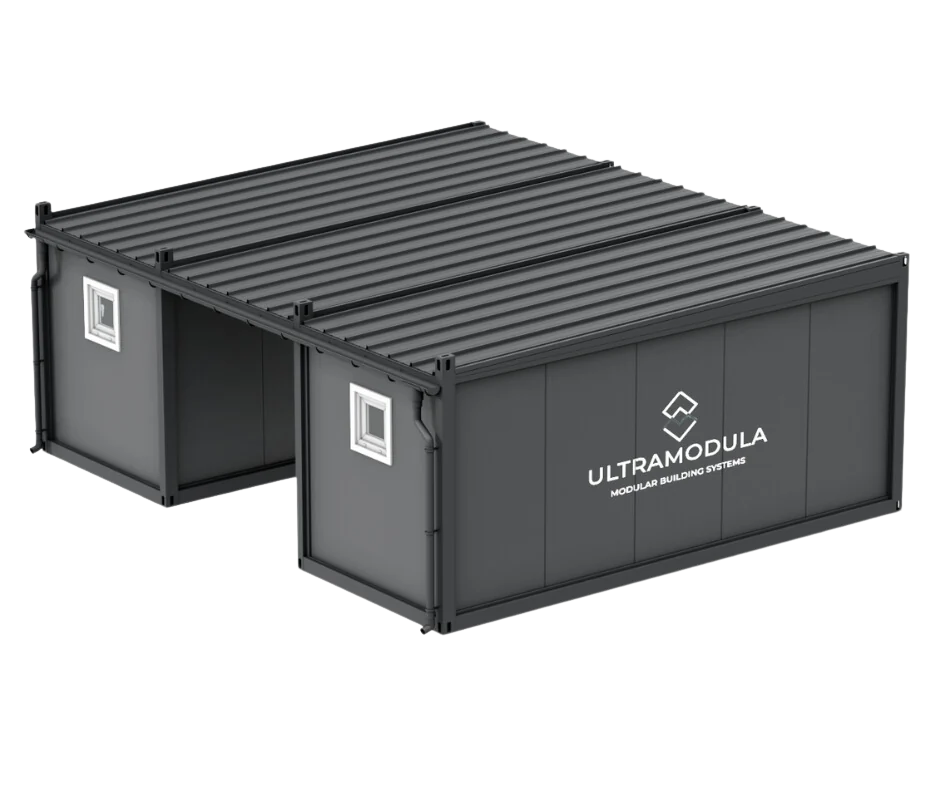
When the first container ship sailed into international waters in 1956, no one anticipated how quickly this form of transportation would take over the world. The creator of both the container ship itself and the shipping containers we know today is Malcolm McLean. Interestingly, he came up with the idea while driving a truck – he was tired of commuting and wasting time on transshipment. He thought it would be a wonderful convenience to be able to transfer cargo from a truck directly to a ship, without the need for porters or other personnel at the port.
The new face of sea transport
And so the truck driver project changed the face of maritime transport forever. Container trademark created in the 50s by Malcolm McLean actually remains the standard until today. At first its length was 33 feet (later it was increased to 35 feet), and its width and height were 8 feet. The key advantage of the American's idea was standardization, which translated into a significant reduction in the cost of transporting goods. And although today the dimensions sea containers have been unified, the basic principle is maintained - "boxes" must be standardized.
Key word: standard
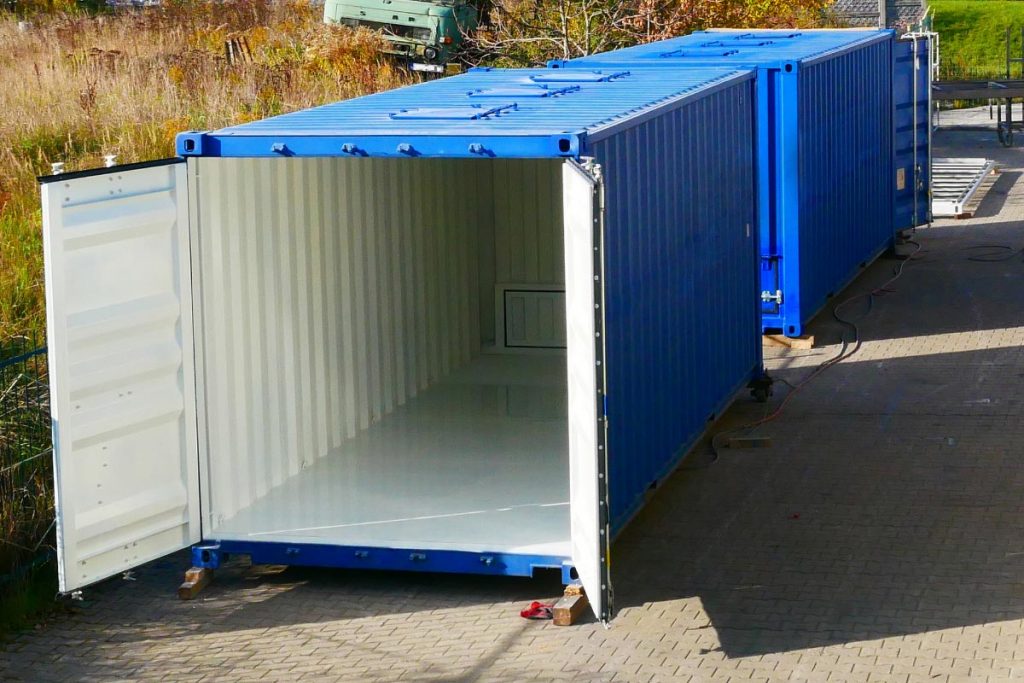
The standardization of container sizes for freight transport has made transportation more efficient, simpler, and cheaper than before. The dimensions and weight of maritime containers are defined by the international standard ISO 668 Series 1 freight containers – Classification, dimensions, and ratings . Its first version was published just 12 years after the first voyage of the Malcolm McLean container ship, in 1968. Since then, it has been modified and supplemented numerous times with new items.
The current edition of the standard includes not only detailed dimensions and weights of containers but also their international designations. This further simplifies transport – at every stage of the supply chain, the size of the cargo being transported is known without any doubt. This simplifies the planning, pricing, and storage of goods.
Basic container sizes
Currently, the most popular classification of containers based on their dimensions is into 20-foot and 40-foot containers , standard-height containers, and HC ( high cube) versions . In the daily work of those involved in logistics, the terms "20-foot" and "40-foot" refer to container length. This stems from the fact that 20-foot and 40-foot containers constitute the vast majority of all container types in use.
The table below presents a summary of the most popular sizes. It's important to note that the 40ft container's length is designed to accommodate two 20ft containers on top of (or underneath) it, while maintaining the appropriate 3-inch spacing.
| Name | Length x Width x Height | Volume |
| 20ft (20ft) | 20 ft x 8 ft x ft 8,6 in 6,1m x 2,4m x 2,6m | ~ 33 m3 |
| 40 ft (40 ft) | 40 ft x 8 ft x ft 8,6 in 12,2m x 2,4m x 2,6m | ~ 66,9 m3 |
| 40 ft HC (40 ft high cube) | 40 ft x 8 ft x ft 9,6 in 12,2m x 2,4m x 2,9m | ~ 76 m3 |
Container weight and capacity
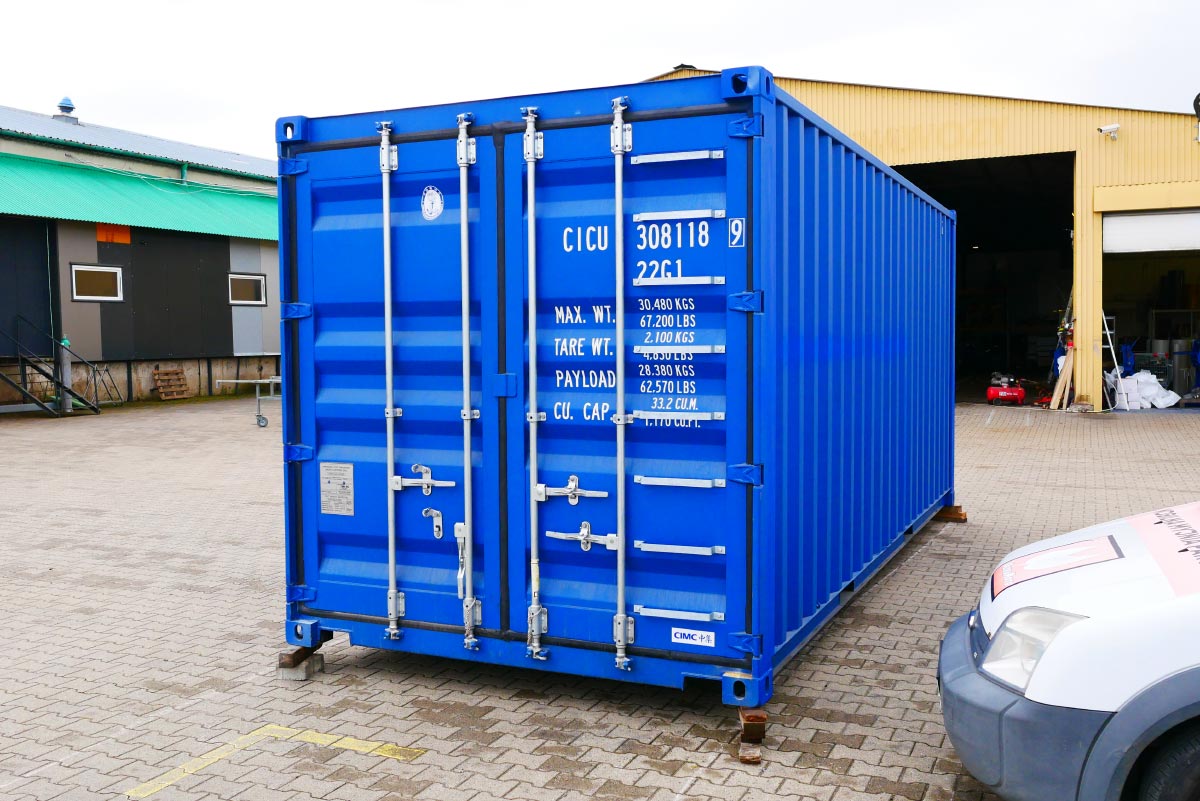
An important parameter related to the dimensions of containers is their own weight and load capacity. Each transport unit, sea, land and air, has a clearly defined maximum load, which is why it is very important to precisely specify the weight of the containers themselves. And this can be different, even for containers of the same size. The discrepancies result from the materials used by individual manufacturers, as well as the security features of the containers. Each additional element, such as a safety bar, is extra kilograms that must be included in the final weight of the container. This information is usually placed on the door, and it is:
- gross mass (max. gross), i.e. the maximum total mass of the container with cargo;
- curb weight (tare), i.e. the tare weight of an empty container.
Additional information displayed on a container is its payload, also known as its load capacity. This is simply the maximum weight of cargo that can be loaded into a given container.
Different purpose, different dimensions of containers
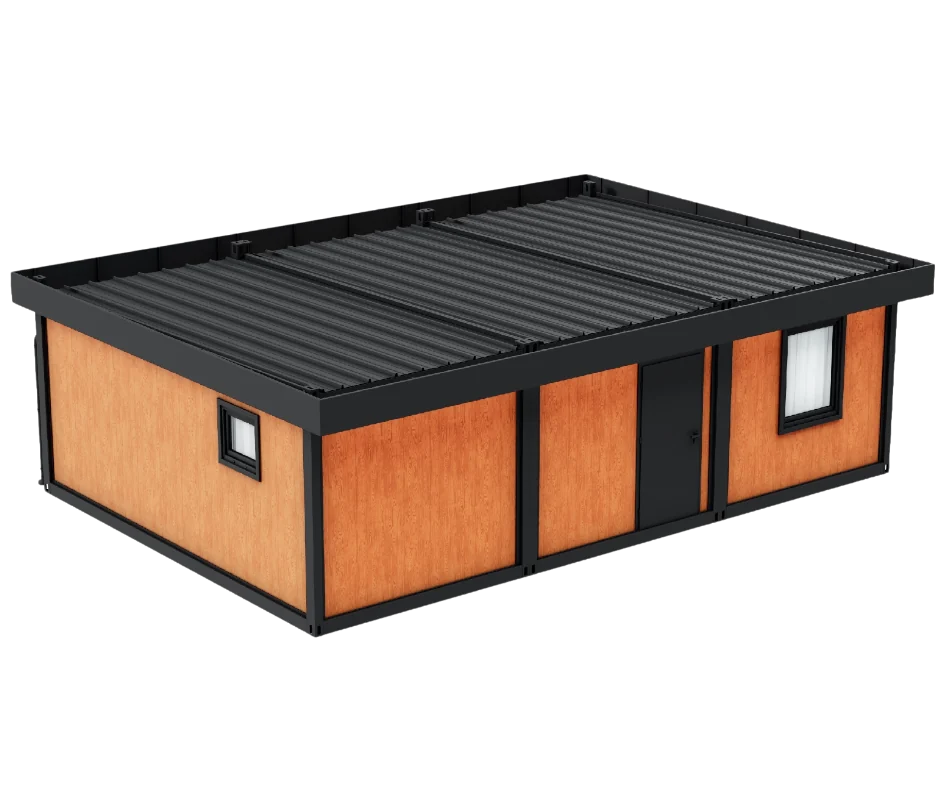
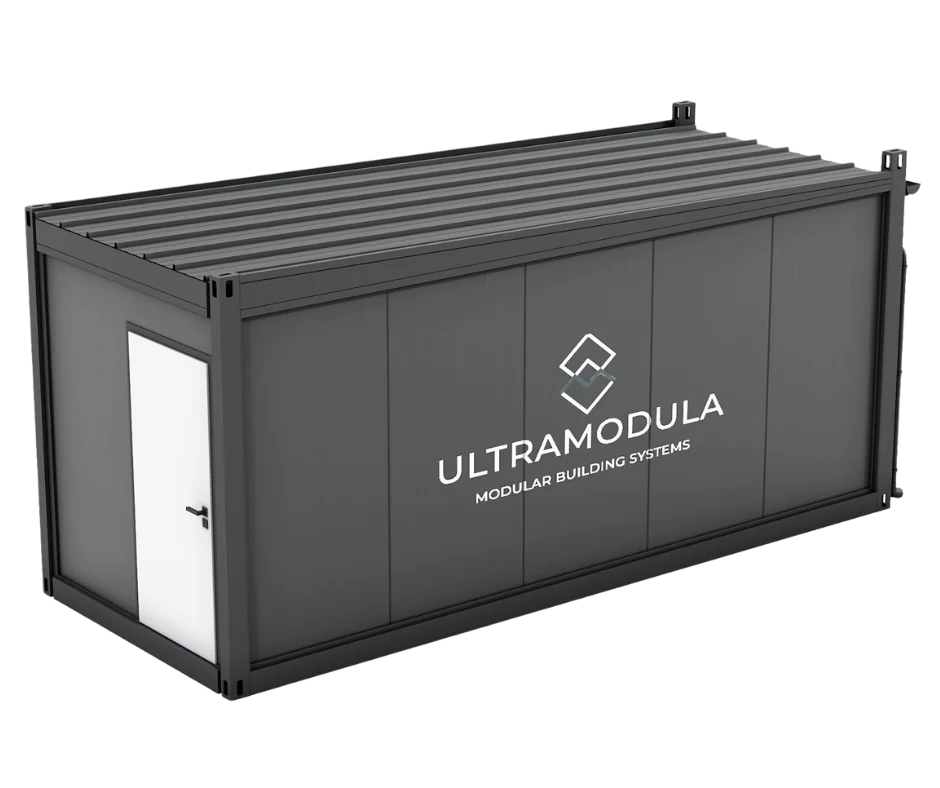
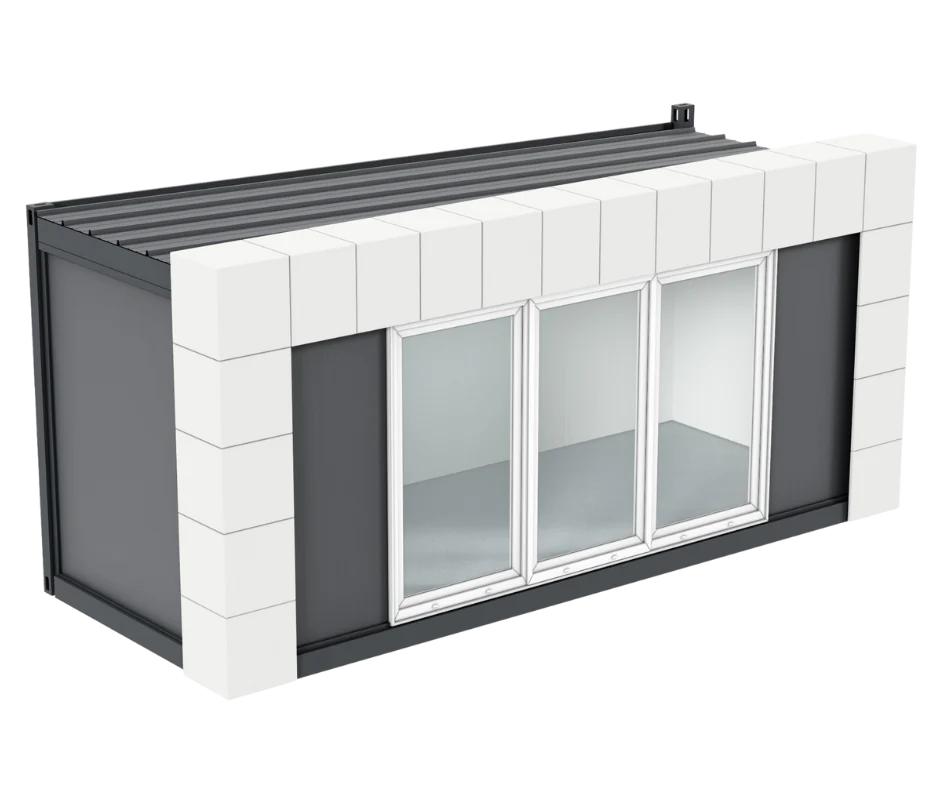
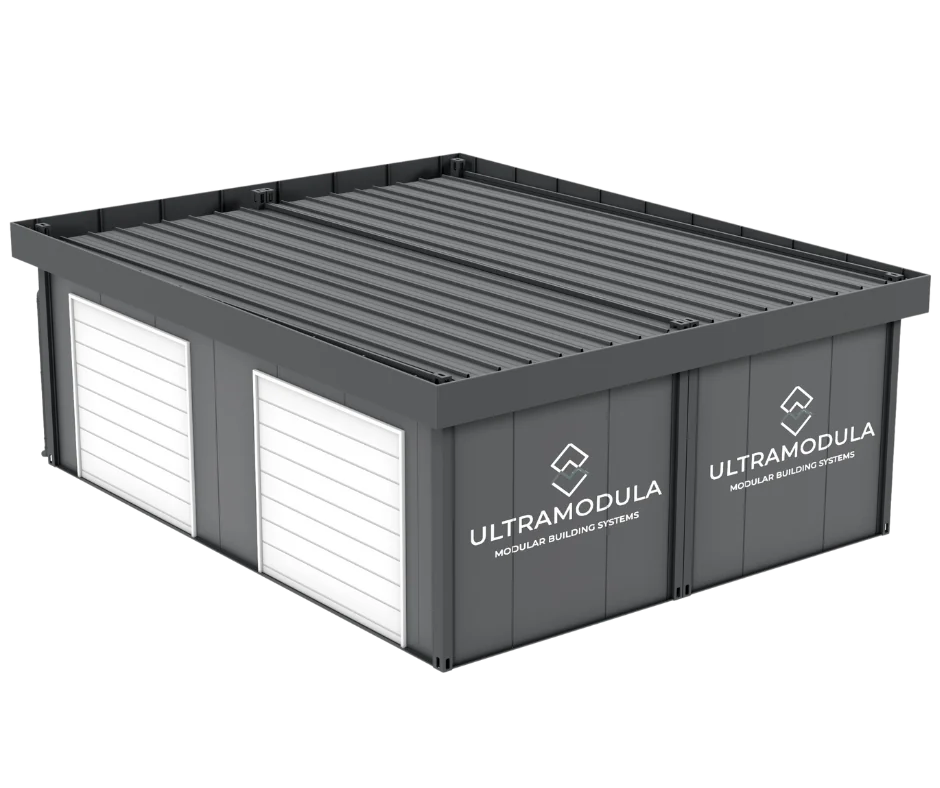
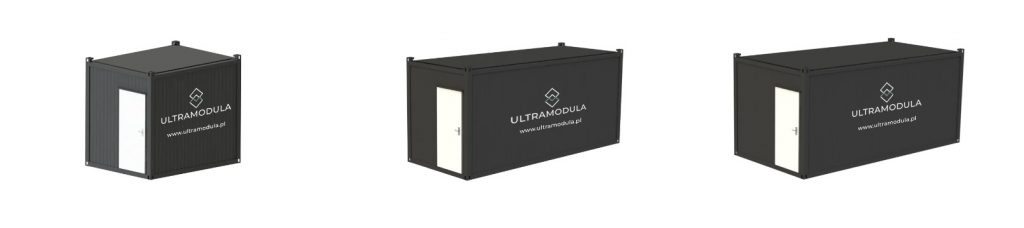
Containers have undergone many evolutions since their inception, and their use in today's world extends far beyond transportation. They serve as warehouses, offices, service points, and even hospitals and hotels. The dimensions of container facilities intended for purposes other than freight transport are not standardized. Manufacturers design their product sizes to best suit their needs or tailor them to individual customer needs.
Popular container pavilions range from 6 square meters to over 15 square meters. It's worth remembering that one of the main advantages of container structures is their ability to be easily combined into larger structures. Therefore, there's no need to create a wide range of sizes – modularity means that just three standardized "boxes" are enough to create an office, warehouse , or other building of virtually any size.
Container sizes – Ultramodula