
Differences between a container house and a modular house
In everyday language, when discussing modular construction, the terms container and module are often used interchangeably. And indeed, in some ways, they are. However, although both types of buildings are forms of prefabricated construction, there are distinct differences between them in terms of construction, cost, and design options.
Container houses and modular houses - do they have anything in common?
To better understand the differences between containers and modules, it's worth first understanding the similarities between them. The most important feature that unites container and modular construction is the functionality of their structures—the ability to build them "like with blocks." Both solutions consist of unified "blocks," or modules with specific, uniform dimensions, allowing for the easy creation of structures of varying sizes.
Furthermore, both container homes and modular homes are highly energy-efficient. Containers are made of steel, a very durable and insulating material. Modular homes are also designed to use as little energy as possible and are equipped with features such as double-glazed windows and robust insulation , which are designed to keep the home warm in winter and cool in summer.
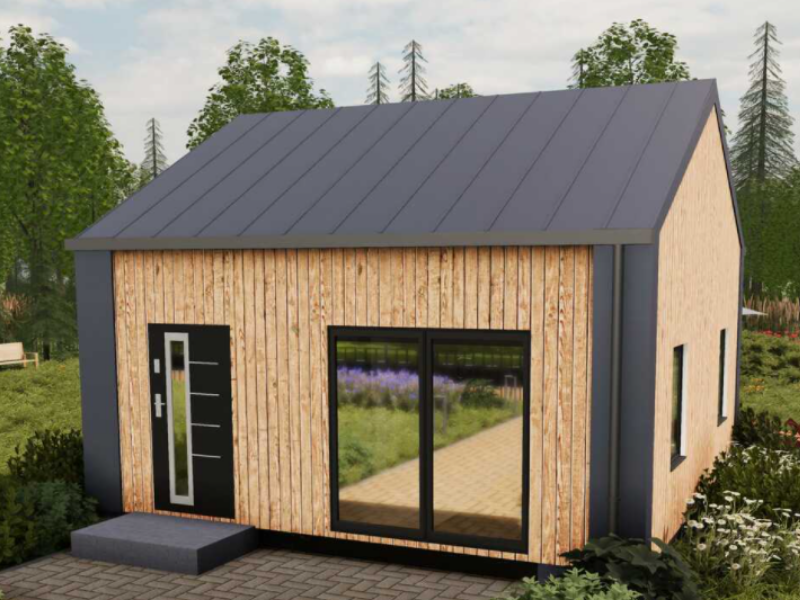
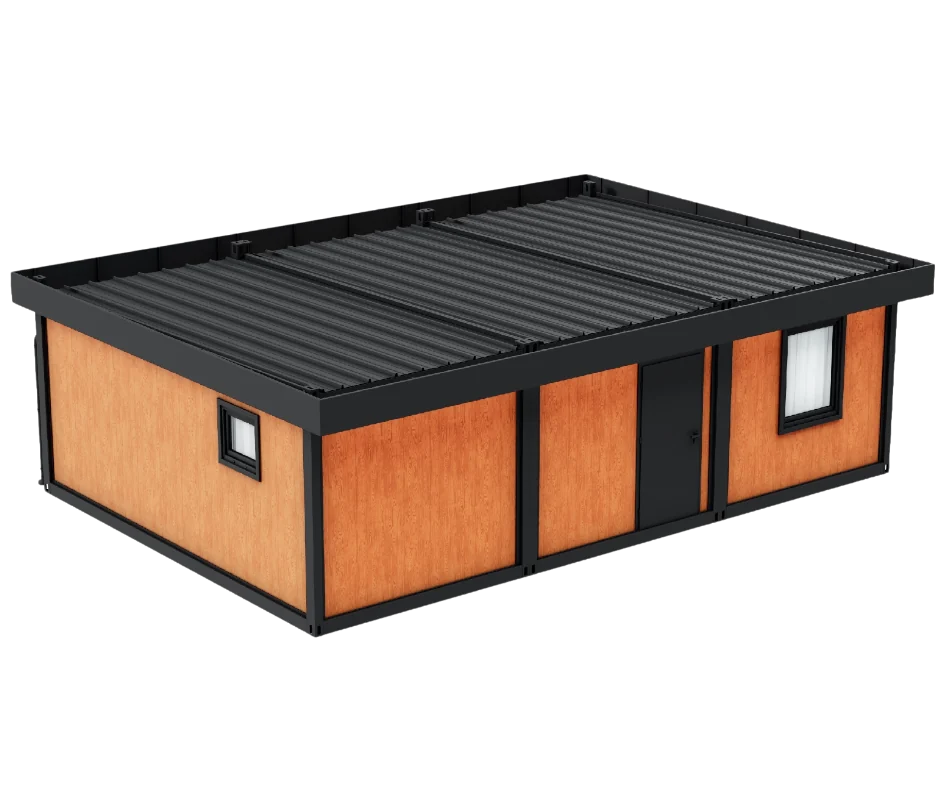
Modular house standard v1 | Ultramodula
What is the difference between a container and a module?
Despite the many features that container homes and modular homes share, they are not equivalent systems. There are several key differences that significantly impact their final form and functionality. Both container homes and modular homes offer unique advantages that make them attractive to those seeking an alternative to traditional construction, but it's worth exploring the true differences.
Layout
Both containers and modules are prefabricated structures, meaning their production process takes place off-site. They arrive at the final assembly site equipped with doors, windows, and electrical, plumbing, and heating systems. Each component is manufactured in a safe factory environment by a team of experienced professionals.
Container houses are made in a simpler construction - their walls consist of three layers: sheet metal, insulation and laminated board from the inside. They are strong and durable, resistant to harsh weather conditions. On the other hand, modular houses are additionally finished from the outside with a facade board (or other material chosen by the investor), and their insulation layer is much thicker. Importantly, the modules offered by reputable manufacturers provide a heat transfer coefficient of U=0,2 W/(m²*K).
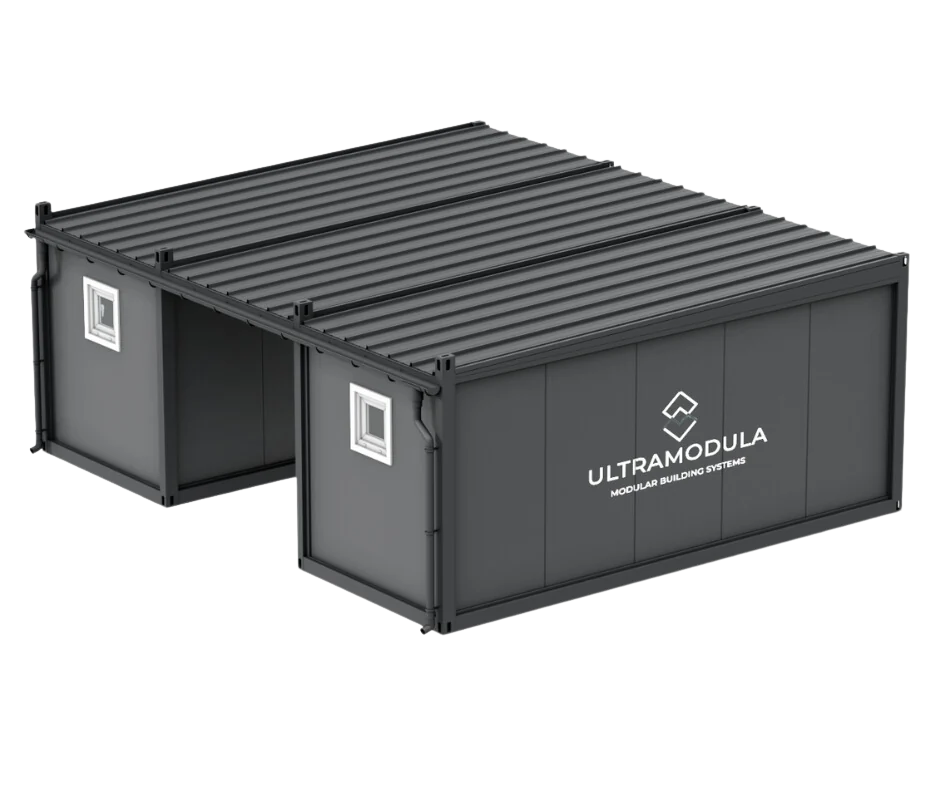
Another significant structural difference is the roof construction method. In containers, the roof is essentially flat, with a 1% slope, while in modular buildings, this slope is as much as 30%. The insulation for this area of the building is also designed differently. While both use mineral wool combined with a vapor barrier, the modular homes are additionally equipped with a roof membrane.
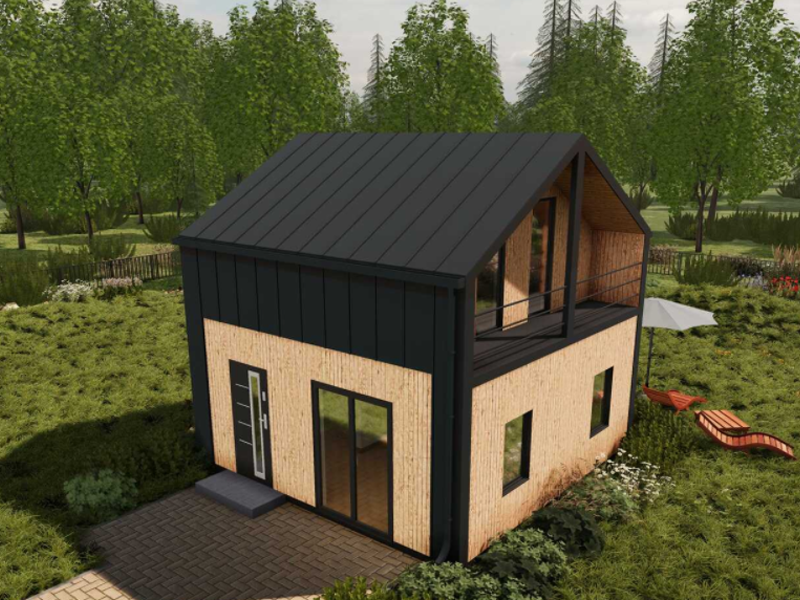
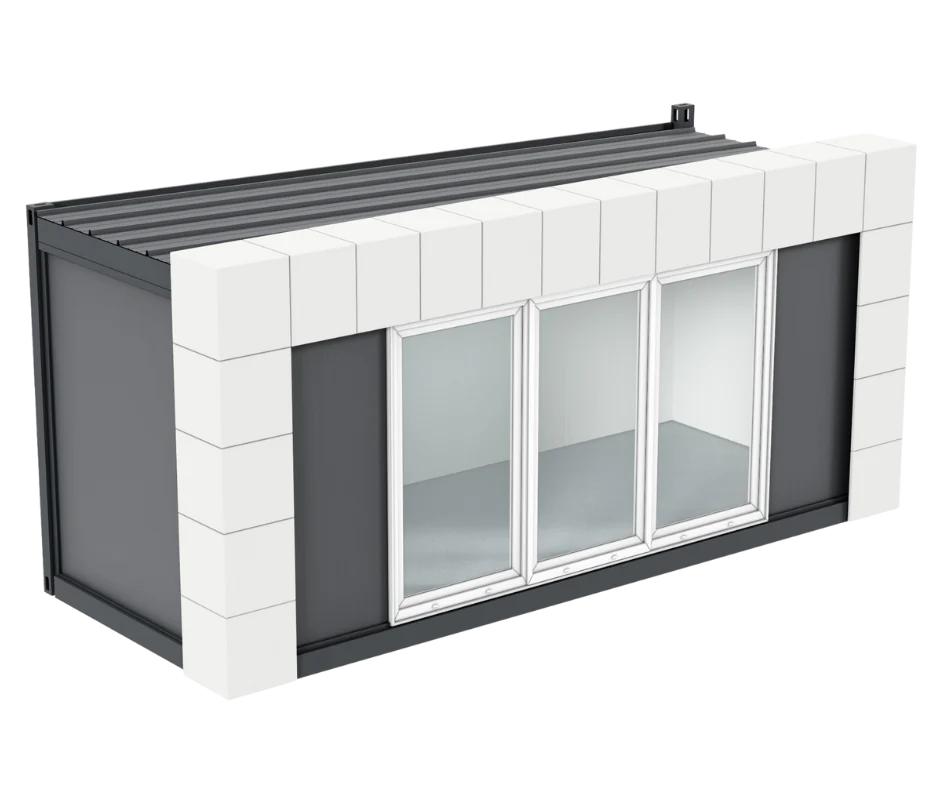
The cottage modular maxi v1 | Ultramodula
Design possibilities
Typically, modular homes are constructed from large steel frames and panels. All components are manufactured and assembled in a factory and then transported to the construction site. These modules are more aesthetically pleasing than container homes, as they can be designed with a variety of finishes and materials. The most common solution is natural cladding boards, which can be painted in a variety of colors, giving designers a wide range of options to customize the building to the investor's taste. An additional advantage is the roof finish. In the case of containers , this is trapezoidal sheet metal, while the roofs of modular homes are typically finished with seam-seamed sheet metal. Both types of finish allow for color selection according to the RAL color chart.
Container houses have their own unique, industrial look - often this style is the main reason for choosing this solution. They are also more compact and take up little space, making them ideal for constructing smaller properties. On the other hand, modular homes can be designed to more closely resemble traditional construction in style and aesthetics, and can be more easily adapted to the specific needs of the owner.
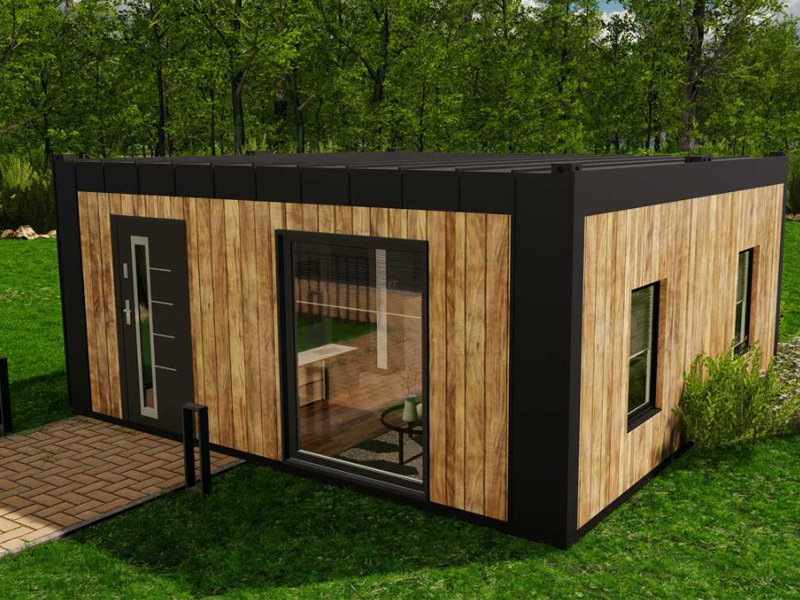
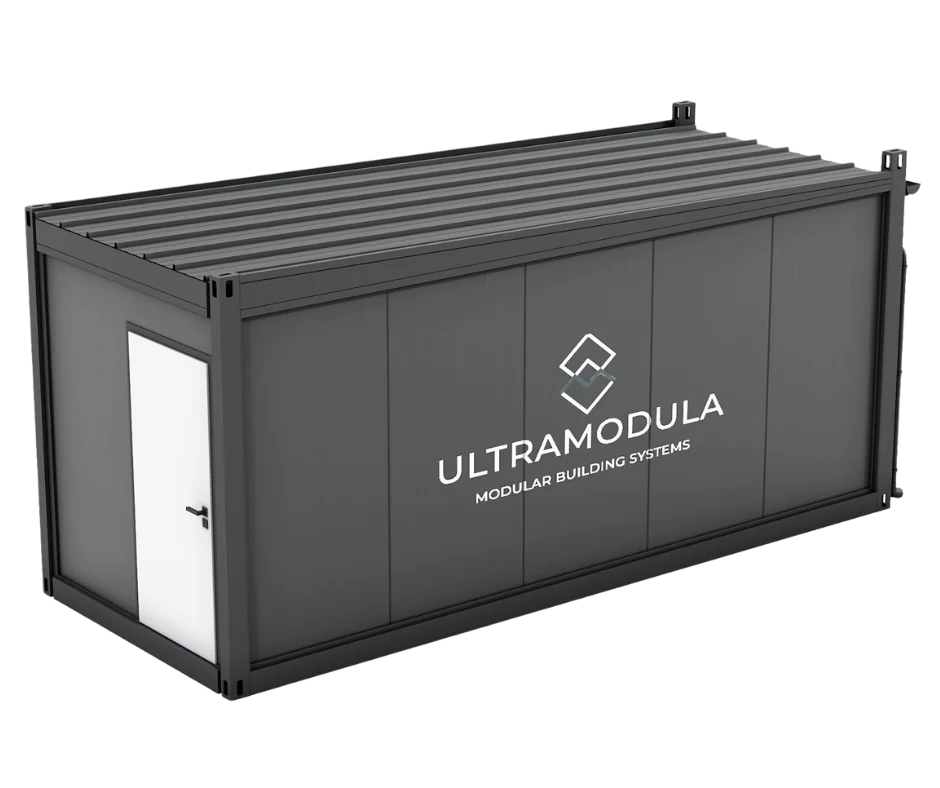
The cottage containerized standard v2 | Ultramodula
Price
Generally, both container homes and modular homes are cheaper alternatives to traditional buildings. However, there are significant price differences between them. This is primarily due to the differences in materials and construction mentioned above. Modular homes undoubtedly offer better aesthetics and a higher level of finish, while containers present a raw, industrial style, which translates into lower production costs. Prices for both residential containers and modular buildings vary and depend on the final building configuration. However, container solutions will always be cheaper than modular homes.
Utility purpose
When considering the differences between modular and container construction, it's also worth focusing on their intended use. Container structures are more often intended for temporary, seasonal, or back-up buildings, such as on construction sites. Modular structures , on the other hand, are more likely to be permanent structures: a residential home (often a residence), a hotel, or a public building.
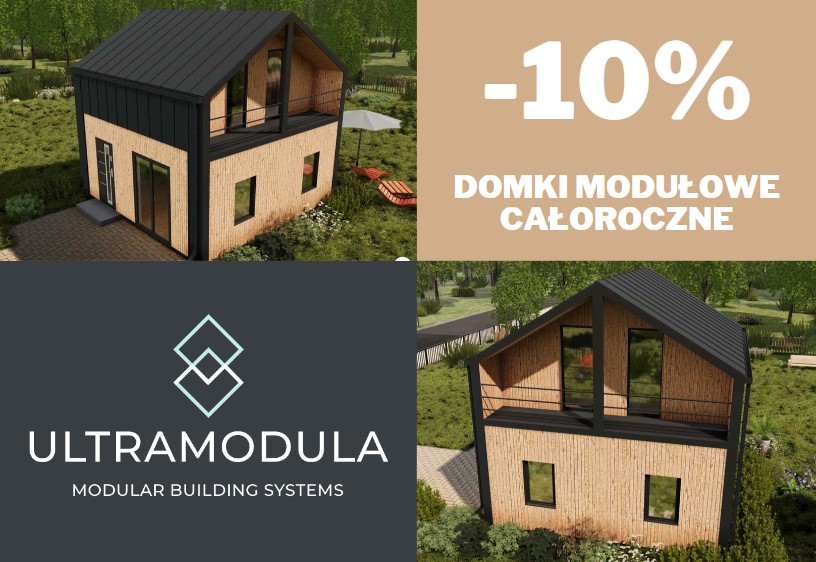
Until the end of January 2023, there is a promotion - 10% discount on the regular price for each modular house in our offer.
Container house or modular house - which solution to choose?
It's difficult to clearly identify the better choice, as it depends on the investor's needs, expectations, and budget. Both container and modular homes have their own set of advantages and disadvantages. Container construction is certainly more affordable and has a unique, industrial look that cannot be replaced by anything else. Modular homes, on the other hand, offer greater design possibilities, allowing for the creation of more interesting architectural structures. Each of these solutions is effective, energy-efficient, and, importantly, cost-effective.
Check out our offer for year-round modular houses: